


Game-based learning should involve more than a game as a piece of software. It should involve designing what Arizona State University Professor James Paul Gee calls “Big G Games.”

In this webinar, Matthew Farber, educator and author, reviewed how games can teach interconnectedness. He showed how he created a project-based learning unit about the Columbian Exchange (the intentional and unintentional trading between Meso-Americans and European explorers) in his social studies classroom.

Much of the recent attention on game-based learning focuses on the value of playful exploration in the primary grades. Using two games developed by MIT – The Radix Endeavor and Lure of the Labyrinth – Carole Urbano and Susannah Gordon-Messer discussed the affordances of game-based learning specifically for STEM disciplines in the secondary grades.
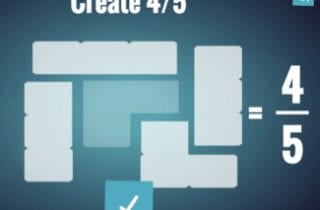
Game-based learning is an emergent concept, and there is a lot of uncertainty about how implement games in the classroom in the most beneficial and effective way. Lee Wilson, CEO of Filament Games, answered the two core questions educators face when integrating games into curriculum: WHAT aspects of classroom practice are games especially well-suited for and WHEN should they be used?
Filament Games, award-winning developer of digital teaching games, is hosting the weeklong initiative from Sept. 15-19, 2014.
“Your students’ work is being affected by their out-of-school video gaming! The average gamer plays 13 hours a week.” Don’t you wish your students were spending that much time reading and writing outside of your classroom? Well—in many cases they are!
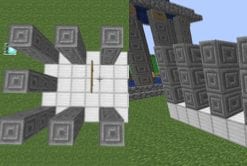
In this webinar for the Game-Based Learning community, third grade teacher Jim Pike demonstrated Mathcraft, a Common Core Math curriculum centered around the popular video game Minecraft that he developed and has been using with his students over the past year.

Lecture, worksheet, test. Lecture, worksheet, test. It’s a common routine in many classrooms, and, rather than a rare virus or nuclear war, it’s likely to be the true cause of a future zombie apocalypse with today’s students who are tomorrow’s future. In an effort to break this vicious cycle (and save humanity?), instructional technologist Lucas Gillispie and pioneering teachers in his school district are teaming up and working to transform classrooms through the use of popular commercial games.
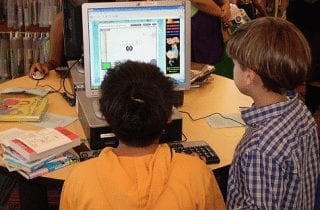
The multiplayer classroom is a technique to incorporate game elements into course design. The course is the game! The multiplayer classroom movement started in 2010 with Lee Sheldon, who was a professor at Indiana University at the time.
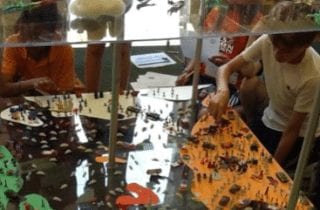
Minecraft is a little indie game that has taken the world by storm and has many wondering why children seem to be “obsessed” with this game. Given the enthusiasm surrounding this game, it is no surprise that educators are exploring ways to bring Minecraft into the classroom.