


Providing Accessible Math Tasks for All Students
 Math can be made accessible to all students using lessons that start at a low level and finish at a much higher level. Teachers can provide different kinds of math tasks on a monthly, weekly and daily basis for varied levels of challenges for their students, including those who struggle. In “Low-Entry, High-Exit Math Tasks that Keep Every Student Engaged,” Arjan Khalsa, CEO of Conceptua Math, discussed the kinds of lessons that can be used to challenge and engage all students.
A three-act task is a group exercise consisting of three videos or pictures. Throughout the three acts of the exercise, students use skills such as thinking, wondering, noticing, estimating, arriving at compelling objectives, using mathematical strategies, and reflecting on solutions and estimates. “(Estimating) in and of itself is a low-entry, high-exit strategy because it doesn’t ask your students to be precise to begin with, it asks them to be thoughtful,” said Arjan. He also suggested the three-act task be a curated activity done once in a while, such as once a month, and for about an hour to forty minutes with the class.
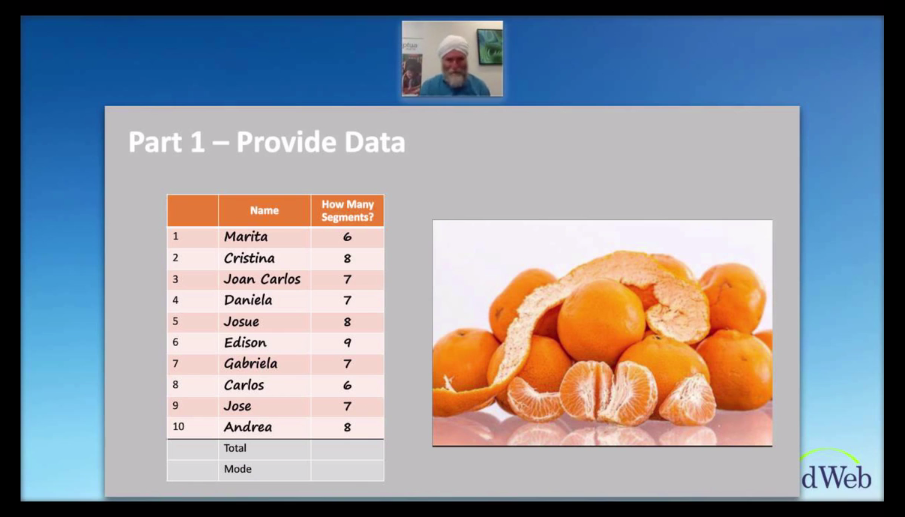
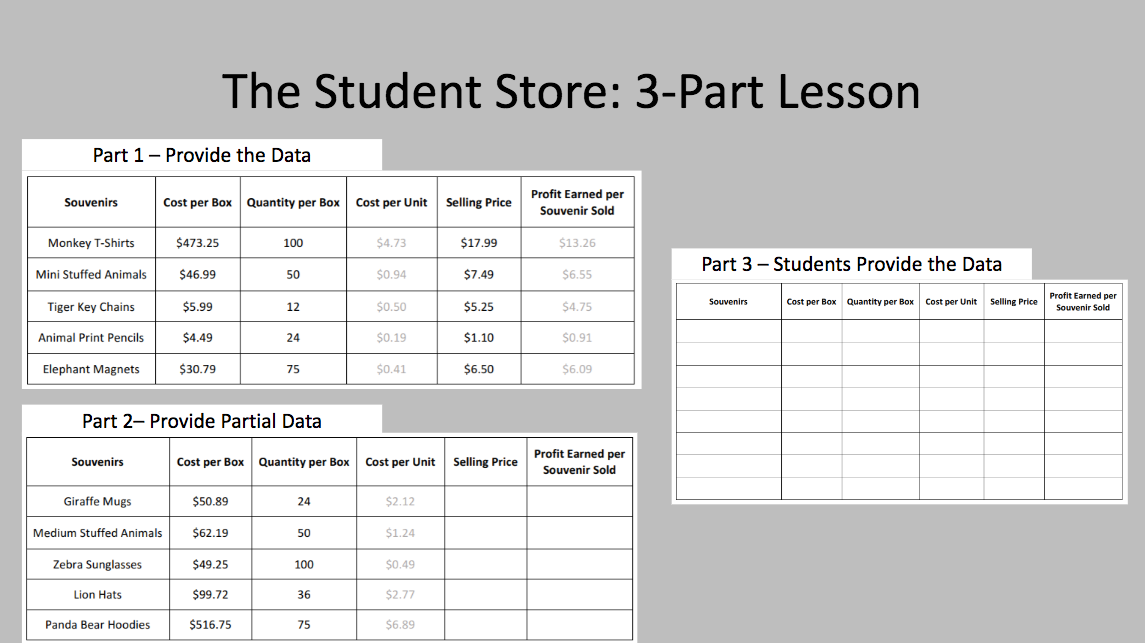
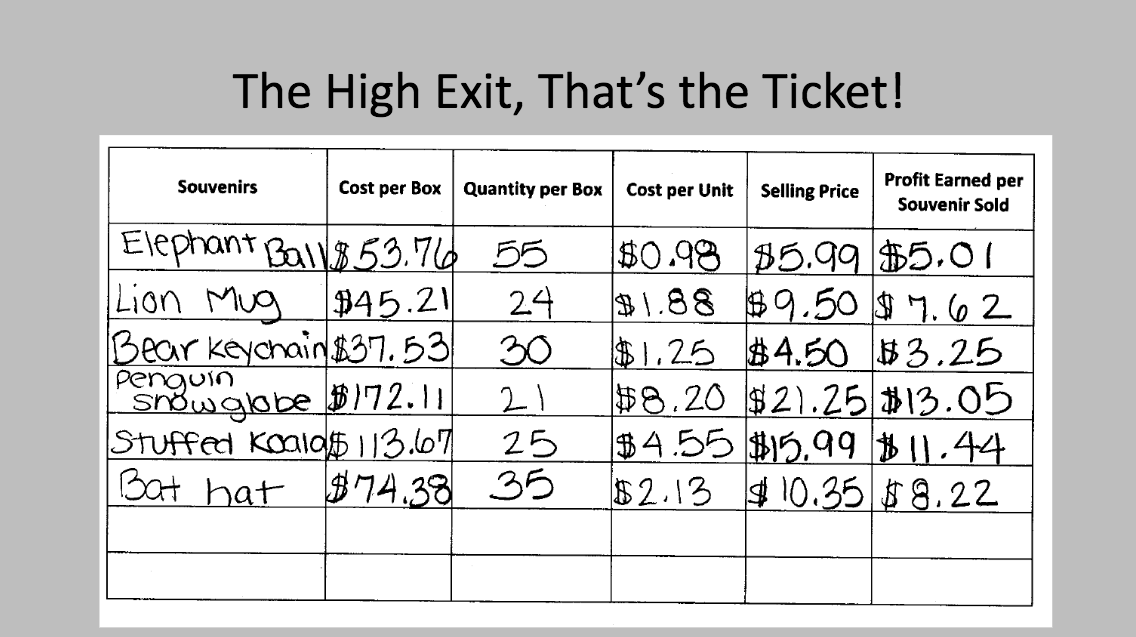 Teachers can use a three-part, real-world investigation system once a week as a low-entry, high-exit math task to get their class comfortable with exploring data. In part one of this task, the teacher provides all data while the students must solve problems like finding the total and mode. In part two, the exercise is repeated except half of the data is provided by the teacher and the other half by the students. In part three, the students provide all of the data; they must work together to collect all the numbers and explore the data. Teachers can do this exercise in their class using many themes, like cafeteria seating, spending on school supplies, or school attendance calculations.
Questioning strategies can be done every day, and can be opened with a question that has varied, interesting, and accessible answers. For an example, using a picture of two fraction models, “What do the models show?” Arjan noted that the high exit can be within your questioning strategy, but he also likes to use journaling as an exit. During a three to five minute journaling session, students can make connections and reveal their thinking on their problem-solving strategies. Arjan said, “Low entry, high exit is where students get engaged. They realize, ‘math is just something I do, and I love it because my teacher makes it work for me every day.’”
This broadcast was hosted by edWeb.net and sponsored by Conceptua Math.
This article was modified and published by eSchool News.
About the Presenter
Over the past 35 years, Arjan Khalsa has been a pioneer in educational technology, curriculum development, and research. Arjan is a passionate public speaker whose primary goal is to uplift teachers by sharing the latest research-proven strategies that lead to joyful results in the classroom. His work has focused in mathematics, science, and special education. As the CEO of Conceptua Math, Arjan works closely with administrators in large school districts, understanding and helping to address their needs and challenges. He also works as a coach in classrooms around the country and as a volunteer teacher trainer for schools in Latin America.
Join the Community
Building Understanding in Mathematics is a free professional learning community that provides a platform, advice and support in helping educators learn methods that help students build understanding in mathematics.
 Conceptua Math is an upper-elementary on-line curriculum that uniquely blends personal and social student learning using visual models and adaptive teaching techniques within the classroom.
Comments are closed.