


Parents today want more information from their children’s teachers and schools, but they also want that information to be timely, targeted, and personalized to their children or their interest areas. The latest data from Speak Up Research Project gives insights on school to home communications. In “Text, Twitter, Email, Call—What Do Parents Say About School Communications?” Dr. Julie Evans, Chief Executive Officer, Project Tomorrow, shared these insights from parents, educators, and administrators, and discussed takeaways from the research.

The Medal of Honor is the highest award for valor in action against an enemy force which can be bestowed upon an individual serving in the Armed Services of the United States. The Medal is generally presented to Recipients by the President of the United States. There are 3,499 Recipients of the Medal of Honor to date, and there are 72 living Recipients.

Math can be made accessible to all students using lessons that start at a low level and finish at a much higher level. Teachers can provide different kinds of math tasks on a monthly, weekly and daily basis for varied levels of challenges for their students, including those who struggle. In “Low-Entry, High-Exit Math Tasks that Keep Every Student Engaged,” Arjan Khalsa, CEO of Conceptua Math, discussed the kinds of lessons that can be used to challenge and engage all students.
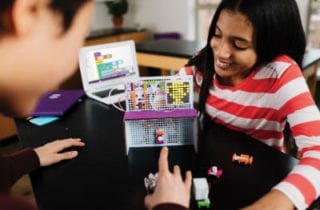
edWeb.net and littleBits Education are partnering to host STEM Learning: Full STEAM Ahead, a free, professional learning community on edWeb that will support educators working with students in grades 2-8. Through this free online community and edWebinars, littleBits Education will help educators empower children to unlock their creative and technical confidence through invention, and to be creators of technology, not just consumers of it.

edWeb.net and Digital Promise are working together to help all stakeholders in education—educators, researchers, and product/service providers—move forward faster with new tools and technologies, but also to ensure that there is solid evidence to support these innovations.

edWeb.net would like to give special thanks to teachers around the world on World Teachers’ Day. Teachers are so important in the lives of our students, and we see every day how passionate they are about learning new ways to engage students in learning and prepare them for the future.

According to the National Assessment of Educational Progress, 80% of students with learning disabilities have dyslexia. In order to create a learning environment that feels safe, comfortable and empowering for students, schools need to adhere to basic guiding principles. In “Creating a Dyslexia-Friendly School,” Terrie Noland, National Director, Educator Engagement for Learning Ally, presented on early intervention for dyslexic students, using the right AT (assistive technology) tools and accommodations for each learner, and creating environments in which students can thrive.
eWeb.net and Voyager Sopris Learning® announce a new, free professional learning community on edWeb, Adaptive Literacy Learning. Voyager Sopris Learning helps preK-12 educators meet and exceed their goals for student achievement, and provides support in the key areas of evidence-based instructional solutions, in-depth professional development, and use of cutting-edge technology to accelerate learning.

Apps bring technology, functionality, and creativity into your school library program. Since apps are a part of our everyday lives, especially those of students, they have the power to totally change the way students and teachers think about learning. In “Virtual Library Program Development,” Michelle Luhtala, Library Department Chair, New Canaan High School, CT, reviewed an A to Z list of 50 apps to virtualize your school library program.
edWeb.net was named the Best Professional Learning Solution for Faculty and Administrative Staff of 2017 as part of the annual SIIA CODiE Awards. CODiE Award recipients are the companies producing the most innovative business and education technology products across the country and around the world.