
Digital learning is increasingly essential in the modern classroom. But how do educators know if digital tools are high quality and engaging?
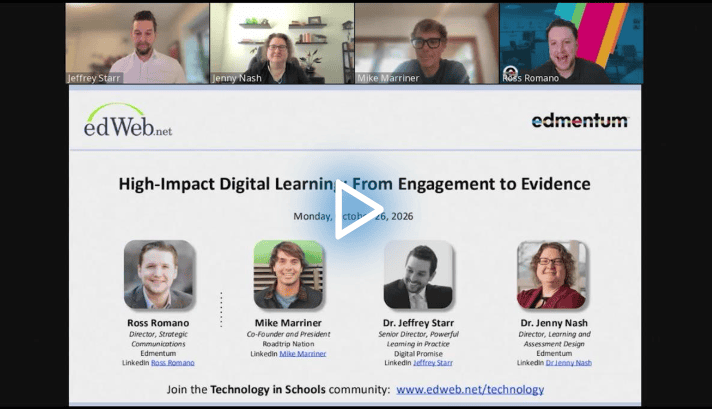
During the edLeader Panel "High-Impact Digital Learning: From Engagement to Evidence," Ross Romano, Director of Strategic Communications at Edmentum, spoke with Mike Marriner, Co-founder and President of Roadtrip Nation, Dr. Jeffrey Starr, Senior Director of Powerful Learning in Practice at Digital Promise, and Dr. Jenny Nash, Director of Learning and Assessment Design at Edmentum and a former educator, about implementing engaging, high-quality multimodal digital learning that connects to students’ lives without losing rigor, and how to identify evidence that the material is achieving desired outcomes.
Learning Begins With Engagement
When students are engaged, they want to learn and persist even when the work becomes difficult. Engaging digital learning can introduce students to professionals who have similar backgrounds to themselves, showing them that they, too, can succeed and helping them build their confidence. Engaging material also connects their interests with active learning, such as answering questions on a video, taking notes, or analyzing content.
Remember, though, engagement requires structure; it's necessary for schools to work with partners who can provide students with the resources they need.
Considerations for Digital Learning
First and foremost, before adopting digital learning tools, leaders must ask themselves what learning needs they are solving and what evidence indicates it’s working. The quality must be clearly defined and intentionally built into curricula from the beginning. Leadership must clearly communicate to educators, and educators must know what standards they’re addressing.
Looking at the research is vital, as it shows what previously has—or hasn't—worked. In addition, educators need to understand the desired outcomes, what skills students should be able to demonstrate, and what evidence can be used to confirm student mastery.
Curricula should be built around how students learn, designed for complex learning that addresses different groups of students, and, again, informed by research. Materials should have research-based design certifications that cite the research behind design decisions.
Engaging digital curricula combine multimodal learning with consistent rigor, utilizing videos, stories, and interactive materials. Video length doesn’t affect engagement levels; students engage when material is relevant to their lives and when active learning is involved. Said relevancy must also be built into core content—by considering who students are, where they’re at, and what they care about, educators can provide meaningful materials that show student learning.
Students also need time to interact with the material, so teachers should provide opportunities for active engagement by considering students’ different learning needs and offering multiple modes so students can find what works best for them. However, we don't want to overwhelm or bore students, so opportunities to stop and think about the material must be combined with information that challenges them.
How can teachers ensure students are partaking in active learning? The key is having tasks to complete during the learning experience. Rather than passively watching a video, they’re actively taking notes, critiquing it with peers, generating responses, or doing other activities to provide evidence that they’ve learned content or developed skills.
How to Measure Engagement?
Measuring engagement is difficult, but there are indicators. Engaged students, for example, have better attendance, work harder, and participate in class. Most engagement evidence is determined based on clearly stated instructional goals and how those goals appear in learning outcomes.
This is why it's so important to have clear communication from the beginning. By examining students’ activities, teachers can find patterns in their work and behavior that align with the instructional goals.
A curriculum students want to learn from takes into account who they are, their needs, and what evidence demonstrates learning. By considering what makes them excited to learn, educators connect material to students’ lives, showing them a path to success in school and beyond.
Learn more about this edWeb broadcast, High-Impact Digital Learning: From Engagement to Evidence, sponsored by Edmentum.
Join the Community
Technology in Schools is a free professional learning community where district administrators, school leaders, and all educators can share ideas, examples, and resources that relate to integrating technology effectively in schools.

Edmentum believes that every student deserves the opportunity to thrive everywhere learning occurs—whether they seek to catch up, stay on track, or chart their own path. When you pair Edmentum’s comprehensive, research-backed learning acceleration solutions—including digital curriculum and courses, K-12 diagnostic-driven personalized intervention, and virtual instruction—with empowered and supported educators, you can change the direction of students’ lives. We partner with K-12 educators in all 50 states and 100+ countries worldwide to design, implement, and sustain the programs that deliver on this shared promise of learning acceleration for every student.

Article by Jon Scanlon, based on this edLeader Panel