Students have probably asked you: How will I ever use this in the real world? It’s a valid question about how classroom learning connects to college and jobs.
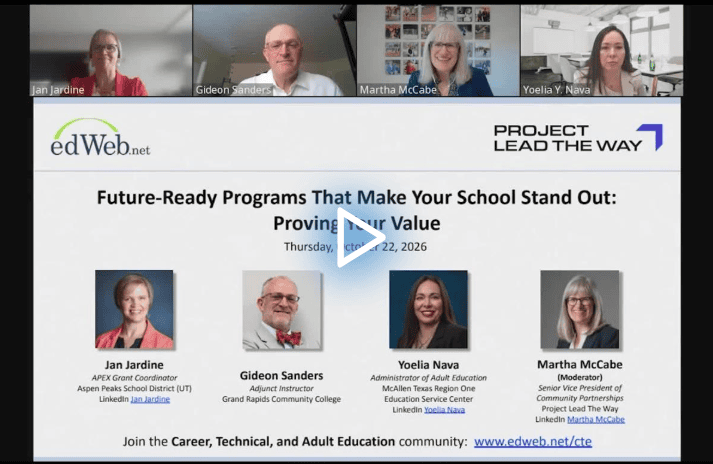
Future-ready programs can support this transition. In the edLeader Panel “Future-Ready Programs That Make Your School Stand Out: Proving Your Value,” educators shared innovative ways to build the practical skills students need to thrive beyond graduation.
Future-Ready Program Components
Future-ready programs inspire students, empower educators, and connect learning to life after graduation. They heighten attendance, boost graduation rates, excite students about learning, and help them see how what they learn today will take them to “tomorrow.”
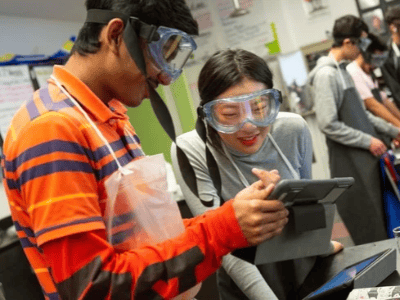
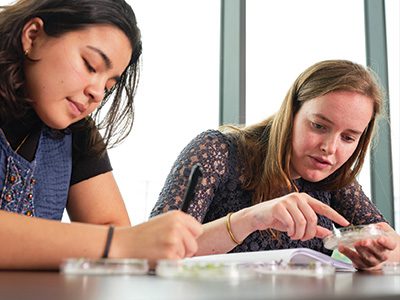
Authentic, hands-on learning lets students experience a profession, balancing instruction and industry preparation. Ideal elements include:
- A full work-based learning continuum: career awareness, exploration (especially of unknown or emerging careers), preparation, and training (internships, apprenticeships, clinicals, etc.), built into programs of study and bolstered by career days or college presentations.
- Core subject-career linkages through initiatives such as robotics and engineering programs.
- Deep industry and community partnerships: mentors, guest speakers, field trips, conferences, and advisory committees across industries, from medical assisting to home building. Partnerships can also provide funding and resources.
- Authentic client projects that build experience with industry tools and essential hard and soft skills, such as teamwork and problem solving.
- Access through strategic scheduling, childcare and transportation support, meals, or even a central district location for industry exposure.
Strategies: Creating and Implementing Programs
Putting programs in place is a strategic labor of love involving relationship building, marketing, and research. The panelists laid out top priorities:
Establish Industry Partnerships
Industry moves fast, and schools need to move with it; the goal is to be on the front end of the curve. No partner is too big or small: Google and local entrepreneurs alike have something to provide. Research companies, reach out, and pitch how their support adds value to students, academics, future employment, and the companies themselves. Key to that pitch is getting potential partners interacting with students to see the benefits of work-based education.
Connect to Workforce Needs
Create pathways tied to regional labor market data on high-demand, high-wage jobs, moving from introductory to advanced courses that might offer employer-recognized certification and lead to real jobs. State industry-recognized credentials for career and technical education can inform program design. Regularly review programs to ensure they prepare students for life after high school, and sunset programs that don’t do the job.
Build Durable, Professional Skills
Skill building must be intentionally designed. Students should practice skills such as problem solving together, then be able to talk about what they are gaining: from an internship, a guest speaker, or a project challenge.
Bring Experiences to the Forefront
Highlight program impact, with students as the primary voice. Showcases, business partner luncheons, and visits with legislators further partnerships and propel effective programs. Share stories with parents to heighten their advocacy for their children’s career development.
Starting Out? Some Useful Guidance
- Start now and start small. Career exposure can begin in PreK and elementary school; start with one teacher, partner, project, or experience rather than waiting for perfection.
- Don’t build alone. Teachers, counselors, administrators, postsecondary institutions, workforce partners, and students each bring needed knowledge and support.
- Listen to students. Survey their needs and wants and let their voice shape the program.
- Ask big. Seek substantial support, not small favors. Start high and work back to something reasonable, without sounding helpless or acting as if you need no help.
- Make partnerships two-way. Use “give, get, and give back”: what partners give students in year one, what they get in year two, and how students give back in year three.
- Stay proactive and student centered. Keeping every project focused on students’ future careers is what draws partners in.
In a nutshell, start small now, build with others around students, and approach partners boldly and reciprocally.
Learn more about this edWeb broadcast, Future-Ready Programs That Make Your School Stand Out: Proving Your Value, sponsored by Project Lead The Way.
Join the Community
Career, Technical, and Adult Education is a free professional learning community where educators, community leaders, and other stakeholders can share information about helping students and adults acquire the academic and technical skills needed for high-skill, high-wage, and high-demand occupations in the 21st century economy.

Inspiring PreK-12 Students and Teachers in Thousands of Schools Across the U.S.
School and district leaders need a solution that cultivates confidence and career readiness—and PLTW checks all the boxes. As a nonprofit organization founded by educators and driven by education leaders, we've spent more than 28 years equipping students with the technical knowledge, transferable skills, and career confidence they need to thrive—through programs that integrate real-world industry partnerships, best-in-class teacher training, and our proven activity-, project-, problem-based (APB) instructional model.

Article by Michele Israel, based on this edLeader Panel