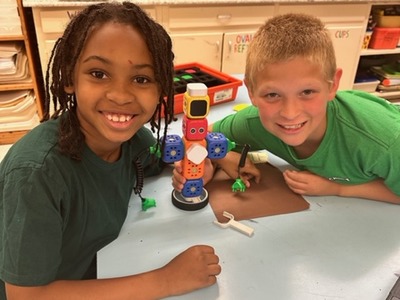

If students could choose, would they want to stay in your class? The question challenged Matthew Ginsburg, Principal of the Chittick, a K0-6 Boston Public School, when he first encountered it in a teacher success rubric as a fourth-grade math teacher. He assumed kids didn’t want to come to math or other classes with difficult topics, like adding fractions.
During the edLeader Panel "Investing in Attendance: Practical Leadership Strategies for Funding Recess and Play," Ginsburg admitted he now knows school or classroom culture is the foundation for learning, giving students the resilience and desire to show up when things are hard. “We know that students can’t access education if they are not regulated, and a huge portion of regulation has to do with whether or not they want to be in the space they are in,” he said.
By focusing on play and belonging, Ginsburg helped reduce chronic absenteeism at Chittick from 30% to 25% in one year with fewer office referrals. “It is because kids are joyful and happy to be at school,” he said.
Prioritizing play or culture can be a tough call for leaders, especially when a long list of priorities competes for the same pile of limited resources.
The ultimate question to answer: “Is it effective?” said Jessica Kott, Director of Special Programs in the Westside Union School District (WUSD) in California. She explained there were doubts when her district began working with Playworks, a national nonprofit that helps WUSD promote positivity, inclusivity, and choice on campus. When staff and teachers saw students more engaged with fewer disputes, doubters were convinced it was working. Since implementation, WUSD has increased attendance rates from 93% to 96.3%.
3 Strategies to Build Your Case
Studies show schools with programs like Playworks have stronger attendance rates, directly affecting how much funding schools receive and student outcomes. As many leaders reassess budgets for the new school year, the panelists offered three ways to make belonging a funded priority, not just an aspiration.
1. Identify Your Target
Start by identifying your target funding amount, Ginsburg advised. He explained that knowing exactly how much money is needed will open or close funding opportunities and clarify priorities. Leaders can assess which programs to let go of or how to reduce costs by starting with a smaller pilot program. “You can start small and demonstrate impact on attendance and culture, then build,” he said.
2. Make Data Work for You
I think “data speaks,” said Kott. Leaders can tap into both quantitative and qualitative data to build a picture of what’s working and where to improve. At WUSD, leaders look at a multitude of data points, but also at culture and how things feel on school site.
3. Connect to Learning Outcomes
Play lays the groundwork for all learning. “We sometimes forget where the basis for learning comes from; a lot of it comes from play,” Ginsburg said. For young children, for example, building blocks support future understanding of two-digit multiplication and geometry.
Recent research from Playworks identified that teachers reclaim an average of 25 minutes of instruction a day. Strategies like “good job, nice try” or “rock, paper, scissors” build inclusivity and teach students to solve conflicts independently. “I think you see the effectiveness because it’s not just recess; it’s used throughout the day and helps kiddos reset,” Kott said.
Finding Funding
Stronger attendance can connect to funding mechanisms like ADA, reinforcing why belonging work belongs in the budget conversation, not just the culture conversation. Federal funding can be applied. For example, Playworks programs meet requirements, including:
- Title I, Part A - School climate, engagement, and attendance initiatives, especially in high-poverty schools
- Title IV, Part A - Safe and healthy initiatives, including physical activity and social-emotional learning
- Title IV, Part B - Before-school, after-school, and summer program funding
- Title II, Part A - Professional development for staff, including training educators in group management and student engagement
Ultimately, students who stay in school achieve more. That, in itself, the panelists agreed, will impact academics.
Learn more about this edWeb broadcast, Investing in Attendance: Practical Leadership Strategies for Funding Recess and Play, sponsored by Playworks.
Join the Community
Leadership Practices for Innovative Leaders is a free professional learning community where school and district leaders share and collaborate on personal leadership skills, professional learning and support for teachers and staff, student learning and well-being, communication with all stakeholders, and more.

Playworks is a national nonprofit that, for 30 years, has partnered with schools and districts to make recess a daily source of belonging and connection. Through professional training and on-the-ground coaching, Playworks helps school staff build safe, accessible play into recess, so kids feel connected, cared for, and excited to show up. Schools partnering with Playworks see stronger attendance, which often ties directly to funding schools receive. Learn more at playworks.org.

Article by Suzanne Bell, based on this edLeader Panel