

Addressing Tier 3 behavior can be challenging, but utilizing a Multi-Tiered System of Support (MTSS) can make successful intervention planning both possible and practical in any size district.

Presented by Sarah Frazelle, M.A., Co-Director, National Student Attendance and Engagement Center, and Senior Researcher, AIR; Trudy Bender, Ed.S., NCSP, Senior Manager of Thought Leadership Content, Branching Minds; and Emily-Rose Barry, VP of Product, Branching Minds

Presented by Annette Duncan, Ed.D., Literacy Coach, Waterloo Schools (IA); and Sarah Brown, Ph.D., President, System Impact Consulting

Presented by John Eisenberg, Executive Director, NASDSE; Traci Hogan, Assistant Superintendent for Special Education, Greenville County Schools (SC); Scott Rhymer, Assistant Superintendent for School Leadership, Greenville County Schools (SC); Julie Weatherly, Esq., Owner, Resolutions in Special Education, Inc.; Phyllis Wolfram, Executive Director, Council of Administrators of Special Education; and Dr. Suzanne Jimenez, National Director, Innovation and Insights, Houghton Mifflin Harcourt

The cornerstone of a Multi-Tiered System of Supports (MTSS) is equity—meeting each and every student’s needs regardless of the barriers. Since the steps between wanting to make the change in a district and actually implementing MTSS can seem daunting, experts during the edLeader Panel “MTSS Success: “Light Lift” Solutions & Strategies to Improve Behavior & Mental Health,” offered their tips for getting started.

Presented by Chris Causebrook, M.S., District MTSS Specialist, Charlotte-Mecklenburg Schools (NC); and Trudy Bender, Ed.S., NCSP, Senior Manager of Thought Leadership Content, Branching Minds

Presented by Susan Lambert, Chief Academic Officer of Elementary Humanities, Host of Science of Reading: The Podcast, Amplify
Presented by Shai Fuxman, Ed.D., Behavioral Health Expert and Senior Research Scientist, Education Development Center (EDC); and Kristi Goff, District Lead MTSS Coordinator, Valdosta City Schools (GA)
Moderated by Jessica Berlinski, Director of PreK-12 Education, Ripple Effects
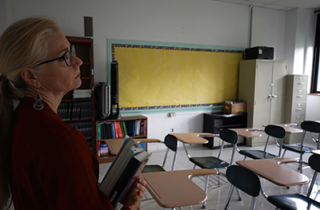
During the edLeader Panel “Decreasing Absenteeism and Its Effects with Meaningful Strategies,” Brian Marques, Sr. Director of Opportunity Youth for Boston Public Schools (MA), Aspen Florence, Educational Consultant for the Utah State Board of Education, and Cecelia Leong, Vice President of Programs for Attendance Works, provided insights into leveraging Multi-Tiered Systems of Support (MTSS) and innovative approaches to understand and address chronic absenteeism and attendance barriers.
Presented by Brian Marques, Sr. Director of Opportunity Youth, Boston Public Schools (MA); Aspen Florence, Educational Consultant, Utah State Board of Education; Cecelia Leong, Vice President of Programs, Attendance Works; and Nicole DellaRocco, Senior Account Director, Panorama Education