early childhood

4 Steps to FLIP a Challenging Moment into a Learning Opportunity for Young Children

4 Steps to FLIP a Challenging Moment into a Learning Opportunity for Young Children

When children use challenging behavior, it is an opportunity to teach them how to become emotionally aware problem-solvers that can use healthy coping strategies in difficult moments. There are four steps that offer a simple, kind, strength-based, commonsense and effective strategy, for day-to-day challenges and challenging behaviors from children (ages 3-8).

How Teachers Can Maximize Efforts On Pinterest

How Teachers Can Maximize Efforts On Pinterest

Pinterest has become one of the best ways to find and share resources for teachers. “Pinfluencer” Kim Vij shared her pinning secrets for how to optimize your Pinterest account, and the tools that she uses to do it.

1, 2, 3, 4, Foundations to Early Numeracy and More!

1, 2, 3, 4, Foundations to Early Numeracy and More!

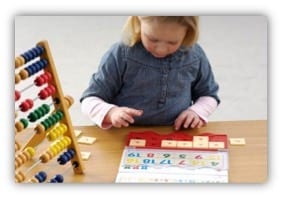
Developing a conceptual understanding of numbers and how they work is critical for continued success in mathematics throughout a child’s academic career. Brian Mowry reviewed and discussed the knowledge and skills — in particular those related to verbal counting, enumeration, cardinality, and small number recognition — which develop in the preschool years and lay the foundation for good number sense.

Strategies for Teaching Young Children with Autism Spectrum Disorder

Strategies for Teaching Young Children with Autism Spectrum Disorder

Dr. Clarissa Willis offered strategies for teachers to assist their early learners with social interaction difficulties, communication challenges, and developing routines. Participants of the webinar then had the opportunity to identify how these strategies could be implemented in their own setting.

Fine Motor Skills…Write Out of the Box!

Fine Motor Skills…Write Out of the Box!

Dr. Marianne Gibbs shared activities and rationale for the WHATs, HOWs, and WHYs of fine motor skill development as it relates to children 3-6 years old. Fun and easy-to-implement activities and strategies were demonstrated with supporting rationale for improving students’ future handwriting efficiency.

If You’re Learning and You Know It: Music Activities to Promote Language, Math And More!

If You’re Learning and You Know It: Music Activities to Promote Language, Math And More!

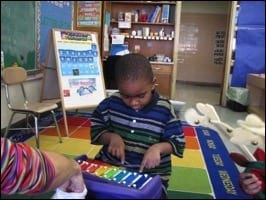
Children start learning through rhythm and music before birth. Throughout early childhood, they learn primarily through auditory, rather than visual, stimuli. Because young children’s minds and bodies are irresistibly drawn to music, it is a natural, developmentally appropriate way for them to increase language skills, early math awareness, social skills, physical development, creative thinking skills, and self-confidence.

Embedding Music in the Early Childhood Inclusion Classroom

Embedding Music in the Early Childhood Inclusion Classroom

Early childhood classroom teachers, aids, and paraprofessionals discovered a wealth of information in this webinar! Attendees learned songs and activities that support social development, language development, and physical/motor development for ALL the children in their classes – including special learners or those with challenging behaviors.

Preparing Children for Success in School and Life

Preparing Children for Success in School and Life

Did you know that if nothing changes, this generation of children will be the first in 200 years whose life expectancy may be shorter than that of their parents? Why? Could it be that we live in an age when family stability is crumbling, children are not eating healthy and yet adopting a sedentary lifestyle, and the media is filled with inappropriate language and explicit violence? What can we, as educators, do to make a definitive difference?

edWeb.net and Gryphon House announce Early Learning Book Chats

edWeb.net and Gryphon House announce Early Learning Book Chats

edWeb.net and Gryphon House have partnered to present Early Learning Book Chats, a free professional learning community (PLC) that helps educators and caregivers find the tools that they need to bring the joy of learning to young children.