Telling a teacher or staff member they are doing a good job is nice and can provide validation in the moment. Offering consistent encouragement and discussing their potential provides opportunities to build trust and create lasting connections.
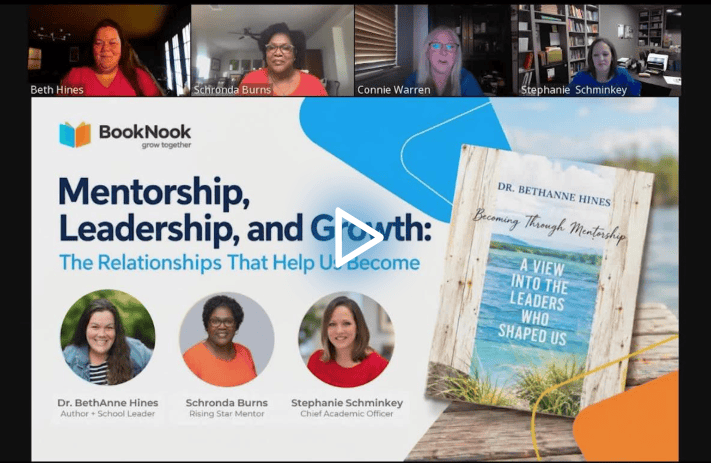
Speaking during the edLeader Panel "Mentorship, Leadership, and Growth: The Relationships That Help Us Become," along with two of her valued mentors, author and elementary principal Dr. BethAnne Hines presented her six principles for developing relationships that help people grow.
1. Open the Door to the Relationship
There’s a big difference between a leader saying they have an open-door policy and cultivating an atmosphere that invites meaningful interactions. Staff need to feel safe when they approach their leaders, free to talk not only about the wins but about their struggles, their concerns, and ideas that might differ from their leader's.
This process starts with small, repeated, and intentional interactions. Ask them what they are working towards and how it’s going. Make note of these details and check in on a regular basis. When staff come into your office, look up, make room for their thinking, and treat them as an equal partner in the education process. By getting to know your staff’s goals and being open to their feedback, you show you have buy-in into what they want to share.
2. Notice What Others May Not See Yet
As you get to know your staff, observe and take note of their skills. Don’t just look at what they're doing well but also at their actions that show they’re ready for their next challenge. Talk with them about what you saw, why it matters, and then connect it to real possibilities. For example, you may notice a paraprofessional who shows the potential to be an outstanding classroom teacher. Show them that you are paying attention to them and support their growth.
3. Challenge People Toward What’s Next
An effective leader recognizes when someone is ready for the next step even if the person doesn’t. More importantly, they provide them with a framework that sets them up for success, while also allowing them to fail. Dr. Hines says a great mentor stays involved but doesn’t take over. They exhibit high expectations, allow their mentee to experience productive struggle, and let them ask questions without dictating the path.
4. Invest—Turn Belief Into Opportunity
Investment in their success means that you are putting in your time. You meet with them on a regular basis, give them ownership of their role, and offer meaningful responsibility. As they develop, give them constructive feedback on how to reach their goals and make sure they understand how the opportunity connects to their growth.
5. Extend—Make the Adult-to-Student Connection
Just as adults need to feel seen, encouraged, supported, and believed, so do the students. When school leaders work on developing growth-oriented relationships, they model for their staff how to develop strong relationships with their students. In turn, students will take risks because they feel the trust and belief in their abilities from their teachers.
6. Multiply—Build a Culture Where It Can Grow.
Caring for your staff—and students—doesn’t mean lowering the bar or having to be a mentor to everyone in your building. Model mentorship and create opportunities for others to learn how to be mentors. Help people find the right person to support their growth, and honor the investment from your own mentors by passing it forward to someone else.
Learn more about this edWeb broadcast, Mentorship, Leadership, and Growth: The Relationships That Help Us Become, sponsored by BookNook.
Join the Community
Leadership Practices for Innovative Leaders is a free professional learning community where school and district leaders share and collaborate on personal leadership skills, professional learning and support for teachers and staff, student learning and well-being, communication with all stakeholders, and more.

BookNook is a leading ESSA Level 1 provider of high-impact virtual tutoring solutions designed to accelerate K-8 student achievement in reading and math. Our synchronous learning model combines engaging evidence-based instruction with consistent learner-leader relationships for exceptional student outcomes. We deliver 1:1 and small-group virtual tutoring that integrates seamlessly with classroom instruction, ensuring that every session is targeted and effective. Our approach is grounded in decades of research, focusing on proven strategies that drive measurable improvements in student achievement.
Article by Stacey Pusey, based on this edLeader Panel