Presented by Celina Bertoncini, Ninth-Grade STEAM Teacher, Brooklyn Emerging Leaders Academy (BELA) Charter School (NY)


Presented by Celina Bertoncini, Ninth-Grade STEAM Teacher, Brooklyn Emerging Leaders Academy (BELA) Charter School (NY)

Presented by Louis Jimenez, Advanced Electronics Teacher, Bowsher High School (OH); and Gerald Voltz, Education Program Specialist, NASA Office of STEM Engagement, NASA Glenn Research Center

Presented by Dr. Henry Astley, Assistant Professor, Department of Biology and the School of Polymer Science and Polymer Engineering, University of Akron; and Dr. Peter H. Niewiarowski, Professor of Biology, Biomimicry Research and Innovation Center (BRIC), University of Akron

Presented by Prof. Raz Kupferman, Co-founder and Chief Scientist, Matific

This edWebinar, based upon the new book of the same title, offers a child-centered solution to this need—STEAM provocations that PreK to Grade 3 educators can use regularly in the classroom during segments of less-structured time.

Join this edWebinar as Dr. Monica Burns takes a look at some of the big trends and movements in the EdTech space and creating a plan for the future.

Steve Spangler shares his creative ideas and strategies to teach hands-on science through the medium of children’s literature.

Creativity and play are children’s work. They build confidence, encourage risk taking, and ultimately shape the soft skills young people need to negotiate school and careers. But, as children get older, their playfulness and creative spirit wane. They aren’t so keen on trying new things and are often afraid of failing when they do. In a recent edWebinar, “Building STEAM Confidence and Creativity in Middle School,” educational technology experts described how enriching STEAM-based learning experiences can enhance the socio-emotional skills students need to succeed now into the future.

Preparing young children for jobs that haven’t been invented yet may sound like a difficult task for educators, but a recent edWebinar showed how preK and kindergarten teachers can start developing the skills needed for future careers. Marnie Forestieri, the CEO of Young Innovators, and Debby Mitchell, Ed.D., a Young Innovators curriculum writer, explained the process for creating lesson plans that include projects introducing science, technology, engineering, arts and math (STEAM), noting that “STEAM happens naturally in young children as they explore and investigate the world around them.”
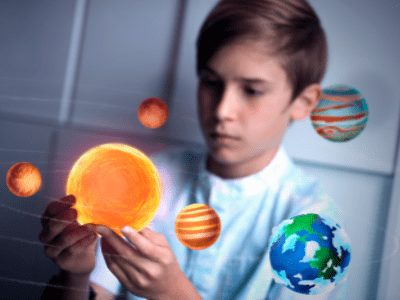
Augmented Reality, or AR, is described by Jaime Donally in a recent edWebinar as a “digital layer in our real world that gives an illusion that it exists in our space.” She highlights that it is an exciting time, as emerging technologies associated with AR are feeling much more realistic. AR software such as Google Maps allows the viewer to have guidance as they are walking in a new area, and AR embedded browsers can display 3D animated objects in real-life environments. The key to giving students opportunities to engage in augmented reality begins with supporting teachers as they enhance learning experiences for students. Using AR software and tools such as 3DBear and MERGE, teachers have access to an abundance of activities and lesson plans that offer more in-depth content, provide opportunities for collaboration and exploration, and expand students learning experiences outside of classroom walls.