

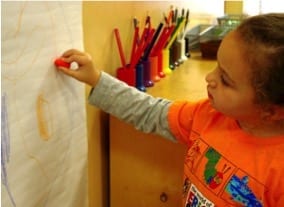
Dr. Marianne Gibbs shared activities and rationale for the WHATs, HOWs, and WHYs of fine motor skill development as it relates to children 3-6 years old. Fun and easy-to-implement activities and strategies were demonstrated with supporting rationale for improving students’ future handwriting efficiency.

Children start learning through rhythm and music before birth. Throughout early childhood, they learn primarily through auditory, rather than visual, stimuli. Because young children’s minds and bodies are irresistibly drawn to music, it is a natural, developmentally appropriate way for them to increase language skills, early math awareness, social skills, physical development, creative thinking skills, and self-confidence.
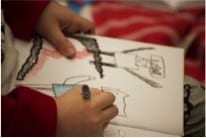
Jenifer Morack, Program Director for edWeb.net and Cheri Sterman, Crayola Director of Education, were featured on Education Talk Radio to discuss Champion Creativity.

edWeb.net and Gryphon House have partnered to present Early Learning Book Chats, a free professional learning community (PLC) that helps educators and caregivers find the tools that they need to bring the joy of learning to young children.

Talking with infants is a hot topic in the news now. Why? Because talking means learning, building knowledge and intelligence. How and how much caregivers talk, engage and interact with infants and toddlers matters.
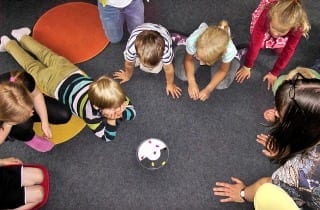
Emotional & social development often takes a back seat to cognitive processes involved in math readiness and reading readiness when the topic of academic learning is being addressed. However, the neuroscience literature demonstrates that emotional and social development goes hand-in-hand with cognitive development.

In this webinar, Steve Spangler shared his creative ideas and strategies to teach hands-on science through the medium of children’s literature. Learn how to use elements of the storyline to get students to think more like a scientist. You’ll be ready to create a collection of STEM experiences your children will never forget.

Webinar attendees embarked on a PAWTASTIC early learning adventure with Travis Brorsen and his talented canine companion, as they introduced life skills, character development and bully prevention for the early childhood classroom. Travis and his talented canine companion equipped students with the self confidence and skills they need to be successful in school and at home.

This session offered ten easy-to-implement yet essential strategies to optimize learning for little ones ages 0-5. Strategies included harnessing the power of music and movement, incorporating sensory experiences, using repetition to cement knowledge, and more!

Before you turn your conventional classrooms upside down, consider how the very different needs of your youngest learners should shape blended learning implementations for PreK-Grade 3.