When vendors market their instructional materials, they tout the impact the materials will have on student achievement. Yet, once the contract is signed and the resources are acquired, the implementation and results are in the school’s hands.
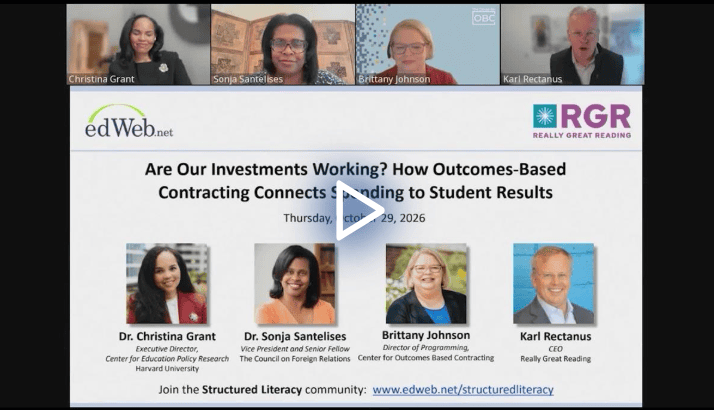
During the edLeader Panel "How Outcomes-Based Contracts Connect Spending to Results," experts proposed upending that model. By making the vendor a partner in the implementation and tying payment to results, supporters of outcomes-based contracts (OBC) believe schools can build a better path towards improving individual outcomes.
A Contract Based on Mutual Accountability
OBC is a student-centered approach, putting students' needs first. The principle behind it is straightforward: a meaningful portion of the contract value is based on achieving mutually agreed-upon student outcomes. In other words, as they develop the contract, school personnel and the vendors agree on what a successful outcome is for the program, the roles and responsibilities of each stakeholder, and remedies if the implementation isn’t meeting expectations. With a contract based on mutual accountability, both sides enter into a true partnership, working together throughout the year to help students meet their goals.
An additional key contract component is determining how the partners will measure success. First, the contract must define the specific students who will use the resource. Then, as part of the process for continuous improvement, the contract details what data sources they will use to measure success, who is sharing the data, the method for sharing the data, and how it will be analyzed. Data doesn’t have to come just from summative assessments, and this is the time to articulate all of the quantitative and qualitative information they will use for the particular goals.
Where to Start With OBC
To start employing OBC, senior school and district leadership must first align on priorities and assess which student population and goals they want to focus on. Furthermore, they should audit current contracts, looking at which student populations those serve, the intended outcome, and the actual results. They don’t have to have an OBC to start examining contracts with an OBC mindset. Moreover, it’s best to start small and make sure you are promoting meaningful progress.
When crafting the contract, though, input should come from more than administrators. Classroom teachers, intervention specialists, education data analysts—anyone who will have a part in implementing the program–should be involved with developing the plan. This not only creates buy-in from the start, but then staff will understand their role once the product is rolled out. Otherwise, teachers may use the product in different ways, and the data won’t reflect whether or not the original plan is working. And, of course, teachers are essential to analyzing what is and isn’t working.
Most importantly, evaluating the data isn’t something that happens every three months or even just once a week. Continuous monitoring allows for microadjustments. Teachers, administrators, and vendors should know when students are veering off track so they can discuss what corrections they should make.
The Benefits of OBC
OBC practitioners have seen several benefits, including:
- The clear implementation plan allows the contract to thrive despite turnover at either the school or the vendor.
- The new format changes how vendors think about product development and sales, giving them new insights into how their programs work in the classroom.
- The two-way accountability deepens the relationship between the school and vendor. Schools are happy to pay vendors when the students succeed, and the vendors take pride in knowing exactly how their program helped each student.
- Teachers aren’t handed a new program and told to figure it out. They know from the outset how they will use the program, what data to track, etc.
- School and district leaders can have more meaningful conversations with all constituents about their plans to improve student outcomes.
With OBC, the contract is the beginning, not the end, of the relationship. OBC helps schools and vendors develop a deeper understanding of each other’s processes and compels them to put improving student outcomes above everything else.
Learn more about this edWeb broadcast, How Outcomes-Based Contracts Connect Spending to Results, sponsored by Really Great Reading.
Join the Community
Structured Literacy is a professional learning community dedicated to advancing literacy outcomes for educators, school leaders, and district administrators.
Really Great Reading has been leading the charge in effective Science of Reading strategies for over 18 years with our proven PK-12 curriculum in foundational literacy and intervention teaching methodologies. We turn reading research into classroom practice, ensuring teachers have cutting-edge strategies and tools in classrooms across the country. It is our unwavering commitment to students and educators that sets us apart from other Science of Reading curricula, and this is evident in the student outcomes and results that districts and schools see when using our products.

Article by Stacey Pusey, based on this edLeader Panel