
Join live or receive a link to the recording and earn a CE certificate

- This event has passed.
Selecting the Best Assessments and Programs to Support High-Quality SEL for Youth and Adults
Thursday, July 22, 2021 @ 4:00 pm - 5:00 pm EDT

Presented by Nathaniel von der Embse, Ph.D., NCSP, Associate Professor, University of South Florida; Stephen Kilgus, Ph.D., Associate Professor of School Psychology, University of Wisconsin-Madison; Tricia Maas, Ph.D., Senior Research Scientist, Committee for Children; and Sherri Widen, Ph.D., Research Manager, Committee for Children
Sponsored by Illuminate Education
Watch the Recording Listen to the Podcast
Closed captioning will be added to the recording within 2 weeks of the live presentation.
Get a CE Certificate for this edLeader Panel Learn more.
For years, research has shown that social-emotional learning (SEL) increases positive social behavior and academic success and is related to children’s improved self-perceptions, grades, and school attendance rates. There is also strong evidence that explicit SEL instruction guided by an SEL program supports the development of essential skills.
But behind these research headlines, SEL program designs and corresponding student outcomes vary substantially. As with any program or curriculum adoption, it’s important to closely review and evaluate SEL programs to make sure they fit the unique needs of your community.
But what questions should you ask when comparing options? In this recorded edLeader Panel, we provide guidance to help you select an SEL program, including:
- Reviewing the key characteristics of an effective SEL program
- How to evaluate SEL program concepts and frameworks to ensure they align with your school’s or district’s mission statement or strategic plan
- How to evaluate programs to ensure they support your community’s stated vision and priorities, resourcing and capacity, and equity advancement
Hear the research that shows teacher social-emotional well-being influences implementation of student SEL programs and plays a critical role in advancing equity initiatives and improving teacher stress management.
SEL will be an important component of return-to-learning plans. This recorded presentation will provide valuable insights to ensure your SEL program is the best one to support your students and teachers.
This recorded edLeader Panel will be of interest to preK-12 school and district leaders.

About the Presenters
Nathaniel P. von der Embse, Ph.D. is an associate professor of school psychology at the University of South Florida. Dr. von der Embse serves as an associate editor for the Journal of School Psychology, and his research interests include universal screening for behavioral and mental health, teacher stress and student test anxiety, and training educators in population-based mental health services. He received the 2018 Lightner Witmer Award for early career scholarship from Division 16 of the American Psychological Association. He is one of the authors of the Social, Academic, and Emotional Behavior Risk Screener (SAEBRS) assessment suite and is an author and behavior team member with FastBridge.
 Dr. Stephen Kilgus is Associate Professor in the School Psychology Program at the University of Wisconsin-Madison where his research primarily relates to social-emotional and behavioral assessment. His work has resulted in the development of evidence-based assessment procedures, as well as the validation of tools for universal screening, problem analysis, and progress monitoring. Dr. Kilgus has authored and contributed to the development of a number of assessments, including the SAEBRS screener and Direct Behavior Ratings (DBRs). He currently serves as a principal investigator on a grant from the Institute of Education Sciences (IES) regarding the validation of the Intervention Selection Profile (ISP), a suite of tools to inform the selection and modification of Tier 2 targeted interventions. Dr. Kilgus is also researching the development and evaluation of Tier 2 targeted interventions.
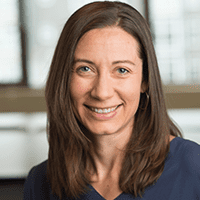
Dr. Tricia Maas is a senior research scientist at Committee for Children where she leads research for the organization’s Second Step® SEL for Adults and Second Step® Out-of-School Time programs. Prior to her career in research, Dr. Maas taught high school math in Charlotte, NC and San Jose, CA. Dr. Maas holds an M.A. in education policy from Stanford University, and a Ph.D. in education policy from the University of Washington.
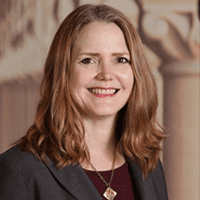
Dr. Sherri Widen’s expertise is the development of children’s concepts of emotions and social-emotional skills. In 2013, she transitioned from basic research in psychology to more applied research in education settings with a focus on increasing children’s social-emotional skills to support their academic outcomes. Dr. Widen has been the manager of research at Committee for Children since 2018 where she contributes to readership and thought leadership on the Second Step social-emotional learning classroom intervention and on products to support families to engage in social-emotional learning at home. Dr. Widen holds a B.A. in psychology and an M.A. in developmental psychology from the University of British Columbia, and a Ph.D. in developmental psychology from Boston College.
Closed captioning will be added to the recording within 2 weeks of the live presentation.
Join the Social-Emotional Learning community to network with educators, participate in online discussions, and receive invitations to upcoming edLeader Panels.
 Illuminate Education partners with K-12 educators to equip them with data to serve the whole child and reach new levels of student performance. Our solution brings together holistic data and collaborative tools and puts them in the hands of educators. Illuminate supports over 17 million students and 5200 districts/schools.