edWeb Blog

Personalized learning plan

Personalized learning supports a diverse student body

The research shows that diversity in today’s students is greater than ever before. In fact, a conservative 30-40% of students may require an alternate learning path or support during their learning. Personalized learning comes into play with such a high level of learner diversity. Superintendent of the Vista Unified School District, CA, Dr. Devin Vodicka and Chief Innovation Officer at Digital Promise Vic Vuchic made the case for personalized learning in the edWeb.net webinar, “Making Learning Personal for All: The Growing Diversity of Today’s Classroom,” sponsored by Digital Promise.

School Family

Early Learning Educators Lead the Way with Professional Learning Webinars

edWeb.net just completed an analysis of the 2016 webinar viewership stats for 2016. We hosted 260 professional learning webinars in 2016 that were viewed by 165,000 educators – an average of 635 educators per webinar. Thirty eight webinars (15%) were on early learning topics and had 45,000 (27%) of the viewers. Early learning webinars had an average of 1,160 viewers, almost twice the average of all webinars.

Brookes Publishing survey prizes

What webinar topics are most important to special ed educators?

For Inclusive Schools Week, which took place from December 5th to 9th, Brookes Publishing, sponsor of the Teaching All Students: Practical Strategies for Inclusive Classrooms professional learning community (PLC) on edWeb.net, celebrated with a five-day giveaway. The giveaway began with a survey in which Brookes Publishing asked special ed educators for their opinions on webinar topics for 2017. Participants in the survey were entered into a drawing to receive a tote bag full of inclusive classroom resources. Brookes Publishing announced five lucky winners, one on each day of Inclusive Schools Week.

teach coding

Going Beyond an Hour of Coding!

Computer Science Education Week (CSEdWeek) is an annual initiative that aims to inspire K-12 students to take interest in computer science. During this annual program, schools around the world host their own Hour of Code™. Organized by Code.org, Hour of Code™ is a one-hour basic introduction designed to celebrate and expand participation in computer science. This year, CSEdWeek took place from December 5th to 11th, and two of edWeb.net’s professional learning communities (PLC) presented webinars that highlighted the importance of coding and computer science in education.

Future Ready Librarians

Librarians at the Forefront of “Future Ready”

Librarians are at the forefront of helping schools become “future ready.” The Alliance for Excellent Education (the Alliance) launched its Future Ready Schools (FRS) initiative in October 2014 with the aim of leveraging technology and connectivity to personalize and transform learning. In June 2016, the Alliance, in partnership with the U.S. Department of Education’s Office of Educational Technology, expanded FRS to position school librarians as leaders in this effort.

Top Webinars

What are the top edWebinars of 2016?

In 2016 edWeb.net hosted over 250 webinars that have been viewed by 170,000 educators. Topics spanned from early childhood education to building a positive school and classroom culture. From integrating technology into school libraries, to special education, to coding and robotics, there was something for everyone this year. We would like to thank our partners and sponsors who help us bring such valuable professional learning to educators, our presenters for sharing their wonderful ideas and practices, and the educators that joined us all year long!

Todd Nesloney headshot

Todd Nesloney says “Kids Deserve It!”

Todd Nesloney, Principal of Webb Elementary in Navasota, TX, dreams of an environment where children are excited to come to school everyday, rather than excited to leave. In a school with a population that is 85% minority and almost 90% free-and-reduced lunch, how does the staff at Webb Elementary approach their students and what are some of the innovative programs behind the school’s success? In this edWeb.net webinar, Todd gave examples of how he works with his students and staff based on his own experiences.

Linda McCulloch Headshot

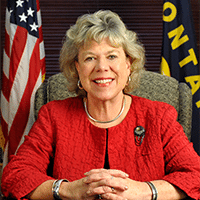
Work Your Dreams Using the Top Five Leadership Competencies with Secretary of State Linda McCulloch

As the first on her father’s side to finish high school, and after ten years becoming the first on her mother’s side to graduate college, a sense of initiative served as the foundation to Secretary McCulloch’s career. After graduating, she began teaching and at the same time became involved in campaign work. “Have you ever wanted something but thought if you said it out loud it would sound foolish?” said Secretary McCulloch, describing her initial thoughts about becoming an elected official. She now admits she was embarrassed to ever have thought that. “As women, we constantly underestimate our abilities. We are our own worst critic when we should be our number one cheerleader,” she said.

How edWeb Helps Teachers

A School Leader’s Guide to Using edWeb for Personalized Teacher PD

To provide the best possible teaching and learning environment, school leaders need to provide their teachers with professional learning opportunities that are personalized and engaging. This is not an easy task when there are so many areas to cover, very little time, and limited funds. edWeb.net is free and can help school leaders provide teachers with personalized PD that meets teachers’ needs and interests, and promotes collaborative learning with peers. Shannon Holden, Assistant Principal at Republic Middle School, MO, provides a guide for school leaders to demonstrate how edWeb.net can be used in any school or district.

Dr. Doug Fisher

Rigorous Reading: Building Strength and Stamina with Dr. Douglas Fisher

Dr. Douglas Fisher, Professor of Educational Leadership at San Diego State University, presented in the webinar, “Rigorous Reading: Building Strength and Stamina,” sponsored by Achieve3000. The webinar explored building strength and stamina in students to improve reading at increased difficulty and complexity. Dr. Fisher began by defining the difference between difficulty and complexity, explaining that difficulty is the amount of effort a student must put into a given task, whereas complexity is the kind of thinking students must do for that task. It is fundamental that teachers maintain the balance between difficulty and complexity to foster an effective literacy program. They can do this by assigning their students many tasks that provide varied levels of each.