Julia Ottesen

edWeb.net Releases 2019 Teacher Professional Learning Survey

edWeb.net Releases 2019 Teacher Professional Learning Survey

edWeb.net announces the release of its annual 2019 Teacher Professional Learning Survey. edWeb has been conducting research on educators’ use of edWeb and its impact on professional learning for a number of years to track trends in professional learning and looking for ways to continuously improve. The survey results show consistency over time in the top reasons why teachers engage in professional learning.

Navigating the Shift to OER

Navigating the Shift to OER

During a tour of updates to SETDA’s Digital Instructional Materials Acquisition Policies for States (DMAPS), which showcases state policies in support of digital materials, Christine Fox, Deputy Executive Director for SETDA, discussed new features like professional development information. In addition, Dr. Michael Nelson, Director of Curriculum and Assessments for Coeur d’Alene Public Schools (ID), explained in the presentation “Navigating the Digital Shift: Leveraging Quality Instructional Materials for Learning,” how his schools are shifting to an OER (open educational resources) environment as part of their overall plan to improve individual student achievement.

Data Analytics

Organizing the Edtech Toolbox

Teachers have many edtech resources in their toolbox now. The question is, are the teachers within a school, grade, or subject area accessing the same toolbox? More important, are the tools of equal quality? During the edWebinar, “Transform Learning: Track Results for Chromebooks, Google Suite, and Every Application,” presenters Kyle Berger, Chief Technology Officer at Grapevine-Colleyville ISD, TX, and Matthew X. Joseph, Ed.D., Director of Digital Learning and Innovation at Milford Public Schools, MA, talked about why they wrangled their technology and how having a defined edtech toolbox improved teaching and learning overall.

Students studying

Belonging and Its Role in Math Achievement

When students don’t perform well in a subject, the typical responses relate to student motivation, e.g., they need more grit, they don’t have the right growth mindset, or they just need to work more effectively. In other words, the student gets the blame. During his presentation, “Promoting Belonging in Math Through Instructional Choices and Practices,” Jamaal Sharif Matthews, Ph.D., Associate Professor at Montclair State University, NJ, shared his research on the role of belonging in school success and how it may be even more substantial for ethnic minority and socially marginalized youth. While his work is primarily centered on mathematics education, Dr. Matthews’ work on building instructional practices to promote belonging can apply across subjects and grade levels.

Leveraging the Science of Learning in Digital Instruction

Improve the Effectiveness of Digital Instruction

The principles of learning have been around for centuries while only in the last 20 to 30 years has the science of learning been studied. According to Paul W. Ownby, Senior Product Manager at Learning.com, during a recent edWebinar, the science of learning focuses on how we learn and how we can maximize the retention and storage of information in our brains. By engaging all three areas of the brain, thinking (pre-frontal), sensing (sensory), and feeling (limbic system), thinking, creativity and identity skills are activated and maximum learning occurs. Leveraging the science of learning, classroom educators can design content activities that are efficient, engaging, model persistence, and reinforce student identity.

Creating Classroom Content in Augmented Reality

10 Augmented Reality Apps for the Classroom

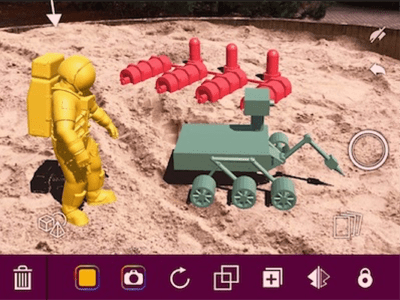
For teachers that have always wanted to use augmented reality (AR)—tech that overlays content on top of the real world—but haven’t had the chance to explore it, Jaime Donally has heard you. In her presentation “Creating Classroom Content in Augmented Reality,” she gave attendees some inside help on which apps to use in the classroom. With programs ranging from beginner level to current AR practitioners, she offered 10 apps that can help educators get started with no coding skills needed.

Group Learning

Emphasize Flexibility and Adaptability When Grouping Students

The gifted group. The slow group. The behavioral issues group. Grouping in schools fell out of favor partially because educators—and parents—felt like kids were getting labeled and that groupings didn’t help students improve. While not calling for a return to those rigid structures, in the edWebinar “Flexible Grouping and Collaborative Learning: Making It Work,” Dina Brulles, Ph.D., and Karen L. Brown, M.Ed., both education consultants, advocated for using groups to assist student learning. They discussed how adjusting student combinations, adapting teaching methods, and preparing students for group learning can lead to successful outcomes.

Students working on tablets in class

What to Identify Before Personalizing Learning

iNACOL defines personalized learning as “tailoring learning for each student’s strength, needs, and interests—including enabling student’s voice and choice in what, how, when and where they learn—to provide flexibility and supports to ensure mastery of the highest standards possible.” Dr. Monica Burns, Curriculum and Educational Technology Consultant, and Founder of ClassTechTips.com, in a recent edWebinar, echoed this iNACOL concept. Before designing learning experiences that are personal to individual students, it is critical for classroom teachers and school leaders to identify student engagement, student interest, student choice, student voice, cross-curricular connections, and differentiated resources.

Make Learning Visible in Your Classroom

Strategies for Becoming an Effective, Present Teacher

Homework, assessments, projects. Grades, lesson plans, conferences. Teachers can get caught up in the day-to-day parts of the classroom and forget to take time to consider whether or not they’re teaching effectively. In her edWebinar, “Make Learning Visible in Your Classroom,” Cari Wilson, Innovation and Technology Lead Teacher at West Vancouver School District, BC, explained how she continually evaluates her instruction to improve her impact on students’ learning.

DIgital Literacy student at computer

Preparing Students with Technology Skills

Digital literacy is the ability to understand, use and interact with technology, media and digital resources in real-world situations. Jeff Meyer, Director of Education at Learning.com, during a recent edWebinar, underscored that while this generation of students is growing up using technology, they generally lack the digital literacy skills they need for success by the time they enter high school. The tech and core standards of organizations such as ISTE, CSTA, and Common Core State Initiative stipulate that students need foundational digital literacy skills to demonstrate writing, reading, and mathematical achievement. It is imperative that students are prepared to enter high school ready for the rigors of writing advanced essays, conducting internet research, engaging in data collection, presenting ideas and drawing conclusions.