Join live or receive a link to the recording and earn a CE certificate

- This event has passed.
UDL in Distance Learning: Meeting Each Learner’s Variability
Monday, February 22, 2021 @ 4:00 pm - 5:00 pm EST

Presented by Amanda Morin, Associate Director, Thought Leadership and Expertise, Understood; Lauren Jewett, NBCT Exceptional Needs Specialist; and Jessica Jackson, Practitioner Partnerships Director, Learner Variability Project, Digital Promise
Moderated by Barbara Pape, Director of Policy and Communications, Learner Variability Project, Digital Promise
Sponsored by Digital Promise
Closed captioning will be added to the recording within 2 weeks of the live presentation.
Get a CE Certificate for this edWebinar Learn more
Universal Design for Learning (UDL) is simply “a way of thinking about teaching and learning that helps provide all students with an equal opportunity to succeed.” And, while all students can and do benefit from its multi-modal focus and use in the classroom, this is especially true for students who learn differently. That’s because UDL is based on flexibility and an understanding of each learner’s variability. It’s been effective in many schools nationwide.
But can UDL be effective in digital learning environments? Schools across the nation have moved to some form of remote learning due to the pandemic. Some provide synchronous virtual learning via video-conference technology. Others engage in asynchronous learning, while a hybrid model is practiced in other school systems. Whatever the approach, distance learning can be a challenge, especially when trying to meet the unique needs of each learner.
The presenters discuss how an understanding of learner variability in a UDL setting can proactively reduce barriers to learning, even in a distance learning environment.
In this edWebinar, discover:
- UDL Guidelines for Multiple Means of Engagement and what that can look like in a virtual setting
- How to translate these guidelines in distance learning environments
- Teacher perspectives on UDL and how its approach reaches all learners, including those who think differently
This recorded edWebinar will be of interest to preK-12 teachers, librarians, and school and district leaders.
 About the Presenters
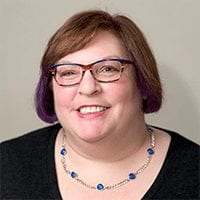
Amanda Morin is an author, parent advocate, and mom to kids who learn differently. She worked as a classroom teacher and as an early intervention specialist for 10 years. In her thought leadership role at Understood, she leads efforts to build internal knowledge about learning and thinking differences, works toward establishing Understood as an authority in the field, and ensures that the organization’s work is evidence based and reflects unique expertise and innovative perspectives.
Amanda received a bachelor’s degree in education from the University of Maine and special education advocacy training from the Council of Parent Attorneys and Advocates. She holds a certificate in Universal Design for Learning from the UDL Implementation and Research Network. She is the author of five books, including The Everything Parent’s Guide to Special Education; What Is Empathy? A Bullying Storybook for Kids; and Adulting Made Easy: Things Someone Should Have Told You About Getting Your Grown-Up Act Together. Amanda is a member of Matan’s Professional Advisory Board and a board member of the Scarborough Education Foundation. She and her family reside in coastal Maine.
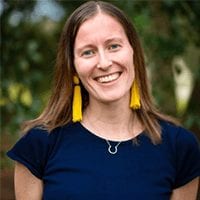 Lauren Jewett serves as the chairperson of advocacy and policy for the Louisiana National Board Certification for Teachers (NBCT) Network. She first achieved status as a National Board-Certified Teacher (Exceptional Needs Specialist Early Childhood Through Young Adulthood-Mild/Moderate Disabilities ages 5-21) in December 2017. In 2009, she started her career as a first- and second-grade special education teacher in St. John the Baptist Parish. Lauren is a master teacher at KIPP Morial Primary in New Orleans, Louisiana, where she has taught special education to students in kindergarten through fifth grade. She currently serves as an ASCD Emerging Leader and an Understood Fellow. She is the secretary of her school’s Parent Teacher Association. Lauren is an active member of United Teachers of New Orleans (AFT-Local 527) and has served on its executive council since June 2013 as a member at large and Vice President of the Committee on Political Education. She is in the process of pursuing a master’s degree in English through Middlebury College’s Bread Loaf School of English.
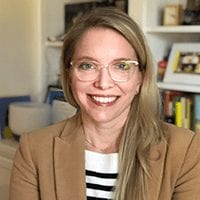 Jessica Jackson comes to Digital Promise with 19 years of experience in turnaround school work and a passion for innovative education reform. Prior to joining Digital Promise, Jessica designed instructional systems and professional development for the Capstone Education Group, a network of charter schools. Previously, she was the founding principal of an integrated arts elementary school and served as a New Leader Resident and Relay National Principal Institute Fellow. Jessica taught third and fourth grade in Memphis, TN and Brooklyn, NY. She holds a master’s degree in education from Pace University and a B.A. from the University of Richmond.
 About the Moderator
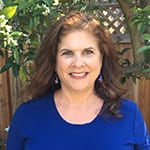
Barbara Pape is the policy and communications director for the Learner Variability Project at Digital Promise. She has 20 years’ experience in strategic communications, writing, and policy analysis, primarily in education. Previously, she served as the executive producer of the award-winning Teaching & Learning conference, sponsored by the National Board for Professional Teaching Standards, where she developed content and oversaw outreach and communications. As a writer, she has written for numerous publications, including Harvard University, the National Education Goals Panel (U.S. Department of Education), and Parents magazine. Barbara also served as editor and publisher of the first electronically delivered education newsletter, the Daily Report Card. She served on the Advisory Board of the Kennedy Center’s Intersection of Arts Education and Special Education Committee, serves as a judge for the Milken-Penn Graduate School of Education Business Plan competition, and is on the Boards at the Education Writers Association and Potentia. She earned an Ed.M. at Harvard University’s Graduate School of Education and launched her career as a middle school language arts teacher.
Closed captioning will be added to the recording within 2 weeks of the live presentation.
Join the Personalize Learning for Learner Variability community to network with educators, participate in online discussions, receive invitations to upcoming edWebinars, and view recordings of previous programs to earn CE certificates.
 Digital Promise was created with the mission to accelerate innovation in education to improve opportunities to learn.