


There are four lies/misconceptions about struggling readers that have become embedded in school systems, said Terrie Noland, Vice President of Educator Initiatives at Learning Ally during a recent edWebinar, “School leaders are just following along and are starting to believe them.” These misconceptions are having a detrimental impact on struggling readers, and school leaders need to set the tone and build a school culture where best practices and evidence-based research are shared to create a system of support for all readers.

In this edWebinar, Mike Marotta, a RESNA Certified Assistive Technology Professional, will share a broad range of low- and high-tech applications and tools to support struggling readers in these grades when it comes to keeping up with classroom assignments.

The statistics are staggering: More than 10 million American students struggle to read, but only 2.3 million are identified and even fewer receive special help. As school leaders, we need to bridge that gap by creating a culture of reading when reading is a barrier. We need to empower and support educators with school-wide programs that embrace different learning styles and prioritize continuity from one grade to the next.
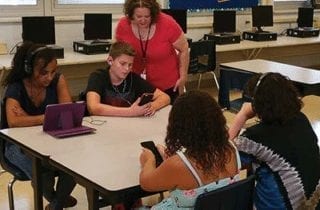
Denver Public Schools and Learning Ally joined forces to find solutions to bridge this content and education gap. In this webinar, Rob Frantum-Allen (Director of Integrated Services) and Jackie Bott (Assistive Technology Coordinator) will explain how the organizations created a strategically designed model program where assistive technology (AT) is being integrated into educational efforts.