


In this edWebinar, develop a depper understanding of micro-credentials and how they personalize learning for educators on a variety of topics.

In this edWebinar, learn how the Vancouver Public Schools Future Ready Admin initiative builds principal capacity in digital transformation, providing personalized professional development to building leaders and engaging in problems of practice for building leadership.

In this edWebinar, discover how a blended learning model can be used as a tool to support effective data-driven instruction.

In this edWebinar, Mary Helen Immordino-Yang, EdD and Vic Vuchic explore how emotion is fundamentally tied to student learning.

edWeb.net and Digital Promise are working together to help all stakeholders in education—educators, researchers, and product/service providers—move forward faster with new tools and technologies, but also to ensure that there is solid evidence to support these innovations.

Join us in this edWebinar to explore how learning science research in the area of early math instruction can help us better support all learners to develop the knowledge and skills they need to achieve success in math.
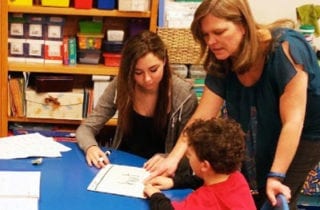
In this edWebinar, Reading Specialist at Calhan Elementary School Cindy Kanuch discusses how to easily find patterns in students’ reading skill deficits that will quickly point teachers to the appropriate intervention.

This summer edWebinar will focus on personalizing one’s info-tainment universe. Expect a discussion of Pandora vs. Spotify vs. Soundcloud; TV and movie streaming; podcasts and news packaging; building playlists; photo editing; radio streaming; exercise programing, and more!
In this edWebinar, Madeline Ahearn, Curriculum Administrator in Eugene School District 4J in Oregon, explores how personalization has evolved in her district and how new innovative technologies have supported increased opportunities to personalize learning.
In this edWebinar, Ellen Dorr, Director of Digital Learning, will share how Renton School District in Washington is developing and using innovative, effective strategies to build teacher capacity and increase achievement for diverse learners.