In this webinar, Early Childhood Music Specialist Ellen Acuna will explore ways teachers can use music, movement, and rhythmic chants to naturally support young children’s emerging math skills in ways that are enjoyable for both children and adults.


In this webinar, Early Childhood Music Specialist Ellen Acuna will explore ways teachers can use music, movement, and rhythmic chants to naturally support young children’s emerging math skills in ways that are enjoyable for both children and adults.

This webinar will explore the ways in which participatory and enjoyable adult-child music activities can engage parents in their child’s learning, enhance the home learning environment, promote family engagement in school, and support a strong child-teacher-family connection.

Presented by Ellen Acuna and Alex Farkas, Music Together In-School Services Mentors Sponsored by Music Together If you attended the...

Through this lively webinar, participants will experience how easy it is to create a musically rich environment that promotes a positive learning atmosphere, engaging children and enhancing the classroom environment.

This lively webinar will highlight the numerous ways in which playful and developmentally appropriate songs and chants can naturally support young children’s development of essential language and literacy skills.

Research continues to emphasize how important the first five years of a child’s life are for brain development. Music can be an enjoyable and easy way for educators to support the development of important structural changes, neurological processes, and cognitive skills during this very active time of brain development.

Children start learning through rhythm and music before birth. Throughout early childhood, they learn primarily through auditory, rather than visual, stimuli. Because young children’s minds and bodies are irresistibly drawn to music, it is a natural, developmentally appropriate way for them to increase language skills, early math awareness, social skills, physical development, creative thinking skills, and self-confidence.
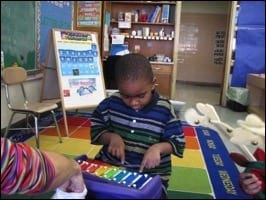
Early childhood classroom teachers, aids, and paraprofessionals discovered a wealth of information in this webinar! Attendees learned songs and activities that support social development, language development, and physical/motor development for ALL the children in their classes – including special learners or those with challenging behaviors.

Songs, rhythmic chants, and small and large movement activities can be an enjoyable way to holistically support young children’s emerging math skills. Before children are able to count to ten or add and subtract, they are developing their mathematical understanding.

In this webinar, presented by the Arts and Music community at edWeb.net, participants were introduced to the ways in which developmentally appropriate and enjoyable music and movement activities can be used as a catalyst for family engagement in school and at home, ultimately creating a musical community that benefits the development of the whole child.