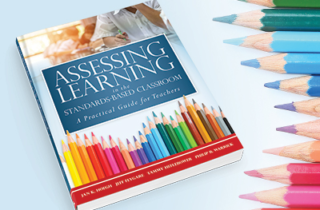

Gamification is the integration of game-based mechanics and design elements into a non-gaming environment to motivate and engage people. While the concept has been around for decades, it is increasingly being used in K-12 education to not only motivate and engage students but also to help them master concepts and content.
Presented by Heidi Alves, Teaching and Learning Specialist, Flagler Schools (FL); Ryan Elizabeth Widdowson, Supervisor of Federal Programs, Clay County District Schools (FL); and Corey J. Peloquin, Vice President of Operations, Penda Learning, A Learning 2020 Company
Presented by Heidi Alves, Teaching and Learning Specialist, Flagler Schools (FL); Ryan Elizabeth Widdowson, Supervisor of Federal Programs, Clay County District Schools (FL); and Corey J. Peloquin, Vice President of Operations, Penda Learning, A Learning 2020 Company

Presented by Dea Paoletta Auray, Author, Founder, Empowering Writers; and Jennifer Seaton, Director of Learning and Development, Empowering Writers
Presented by Scott McConnell, Ph.D., Director of Assessment Innovation at Renaissance and Emeritus Professor of Educational Psychology at the University of Minnesota; and Rachel Brown, Ph.D., Senior Research Consultant at Renaissance and Professor of Educational and School Psychology Emerita at the University of Southern Maine

Presented by Jon Alfuth, Senior Director, State Policy, KnowledgeWorks.org; Dr. Kipp D. Rogers, Chief Academic Officer, Virginia Beach City Public Schools; and Doris Zahner, Ph.D., Chief Academic Officer, CAE
We know assessment is a tool that helps teachers to inform personalized learning, differentiate instruction, accelerate learning, and ultimately support healthy learning mindsets. But all this happens only when assessments are valid and reliable. Or, more simply, when assessments are good.

Presented by Dr. Jennifer Bishop, National Reading Consultant, Reading Horizons; and Stacy Hurst, Chief Academic Officer and Assistant Professor of Reading, Southern Utah University

Using student data to guide instruction is not only an effective way to increase student achievement, but it can also help educators grow professionally as they continue to analyze new data, discuss its implications, and explore solutions.