


As a growing number of school districts are turning towards digital tools to support teaching, it’s important to ensure that these tools are adding value by transforming learning experiences. The SAMR model (Substitution, Augmentation, Modification, Redefinition) and TPACK model (Technological Pedagogical Content Knowledge) can help schools as they transition to using more digital tools. In a recent edWebinar, Michelle Luhtala, Library Department Chair, New Canaan High School, CT, reviewed these models and discussed apps that can take teaching, learning, and reading to the next level.
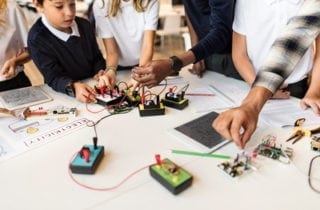
Maker culture is thriving in schools and public libraries across the United States and beyond. From challenges to success stories, no two makerspaces are alike, and maker facilitators have valuable lessons to share. In their recent edWebinar, Michelle Luhtala, Library Department Chair at New Canaan High School, CT; Ethan Heise, Director of MackinMaker; and Heather Lister, Professional Learning Specialist, had a discussion on their experiences with makerspaces and shared advice for those starting their maker education journey.

When educators think about diversity in the classroom, culture may be one of the characteristics that crosses their mind. But as they select their curriculum and develop their lessons, most teachers are not accounting for how culture will impact a student’s ability to participate and learn, says Dr. Almitra Berry-Jones, nationally recognized speaker, author, and consultant on the topic of culturally and linguistically diverse learners at-risk. In her edWebinar, “Cultural Relevance and Academic Equity in the Age of ESSA,” Dr. Berry-Jones explained how understanding the impact of culture, adopting a student-first mindset, and creating multiple points of engagement with the same content will help teachers move towards academic equity in their classroom.

edWeb.net is excited to announce that it was named a 2018 SIIA CODiE Award winner for Best Collaborative Social Media Solution for Educators and Best Professional Learning Solution for Faculty & Administrative Staff, and also won the top award of Best Overall Education Solution. The Best Overall Education Solution represents the product with the highest scores of both rounds of judging out of all finalists.

Social-emotional learning. Character education. Bullying prevention. These programs all fall under the larger umbrella of emotional intelligence (EQ)—the ability to manage one’s feelings and interact positively with other people. While many schools may touch on it during the school year, Maurice J. Elias, Ph.D., and Steven E. Tobias, Psy.D., authors of Boost Emotional Intelligence in Students, advocate for more formal training in EQ. During their recent edWebinar “How to Boost Emotional Intelligence in Students,” they explained how data shows a high EQ is “more highly correlated with career success than academic skills.” More important, in order to help kids retain their EQ skills, they said schools need to adopt a systematic approach to improving emotional awareness.

Teacher. Classroom facilitator. Database analyst? This new role for educators is a direct outcome of the data-driven classroom and the quest for accountability. While teachers may understand the need to collect the information, they resent inputting the same data over and over again in every learning management system, educational application, and state and federal accountability report. More important, the data entry can seem pointless when the outcomes aren’t applicable to the students. In an edWebinar for edWeb, Dr. Tracy Weeks, executive director for SETDA, and her co-presenters discussed how implementing data interoperability standards can turn data from a daily chore into a productive tool that can provide educators with a more complete picture of the student, class, school, or district.
Refocusing classrooms around up-and-coming digital materials requires more than just adding a new tech-based product or two as many processes for reviewing and purchasing instructional materials are still built around print textbooks. Now, though, some states are going back to the beginning and rethinking how they review instructional materials and allocate funds to ensure that they are focused on the realities of the 21st century classroom.

For many of the 4.5 million English Language Learners (ELLs) in U.S. elementary and middle school classrooms, learning and understanding the language of mathematics can be a challenge. Supporting ELLs requires a commitment to a shift in practices which involves the entire school and also branches out to the community. Michele Dawson, Senior Director of Instructional Technology in Compton Unified School District, CA; and Kelly Urlacher, Senior Curriculum Designer at DreamBox Learning, had a conversation of essential approaches for supporting these students in “Key Strategies to Making Access and Equity a Reality for ELL Students.”
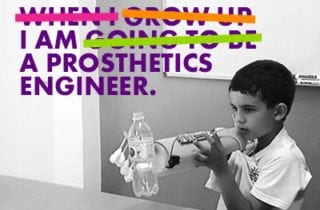
STEAM lessons offer educational benefits beyond technological literacy, such as collaboration, creativity, and critical thinking. Educators who incorporate STEAM into the classroom are preparing students now for jobs that don’t exist yet by giving them confidence in problem-solving, noted Dr. Azadeh Jamalian, Adjunct Assistant Professor at Teachers College, Columbia University, Head of Education Strategy at littleBits. For many educators, though, blending STEAM with traditional subjects can still seem daunting. During the edWebinar “Bringing Hands-On Coding and STEAM into Your District or Classroom,” Dr. Jamalian offered attendees insights into four key factors that can support successful STEAM integration.

Augmented reality is emerging in the education space as a tool for motivating children to learn. Using this 3D technology can help students significantly whether they’re struggling to learn reading or math, or just to engage. Cynthia B. Kaye, CEO and Chief Zoo Keeper at Alive Studios, discovered this technology while in search of a way to support her own two ELL children. She discussed the benefits of using augmented reality in the classroom in “Engaging Early Learners with Augmented Reality.”