

edWebinars
«Back to all edWebinars- This event has passed.
Mutually Beneficial Parent-Teacher Partnerships: Collaborative Strategies for Supporting Neurodivergent Learners
Monday, October 19, 2026 @ 12:00 pm - 1:00 pm EDT

Mutually Beneficial Parent-Teacher Partnerships: Collaborative Strategies for Supporting Neurodivergent Learners
Presented by Andrew Kahn, Psy.D., Associate Director of Expertise and Behavioral Health, Understood; and Sarah M. Scott, Ph.D., Former Educator, Current Neurodiversity Researcher, Digital Promise
Moderated by Nick Schiner, Former Educator, Current Director, Peer-to-Peer Professional Learning, Digital Promise
Sponsored by Digital Promise
Learn more about earning a CE certificate and our accessibility features.
Navigating transitions between school and home can present significant challenges for all learners, but especially neurodivergent (ND) students. Expectations, routines, and environmental supports are often different at home and at school, which can affect a learner’s mindset and impede successful learning outcomes. Educators may lack context regarding a student's home environment necessary to design instruction with that learner’s specific needs in mind, and it can be a struggle to integrate what works at home with school-based supports and IEP accommodations. Strong parent communication can bridge the gap and, at the same time, offer parents vital information they need to support behavioral learning at home.
By adopting a bi-directional approach to communication, rooted in the whole-child lens of learner variability, educators and families can build constructive partnerships that extend well beyond traditional parent-teacher conferences to align supports and foster greater consistency for students across all settings.
Watch Sarah M. Scott, Ph.D., Digital Promise’s Neurodiversity Researcher, and Andrew Kahn, Psy.D., Understood’s Associate Director of Expertise and Behavioral Health, in a discussion-focused edWebinar on bridging the gap between home and classroom environments.
In this recorded edWebinar, learn:
- How to identify key learner variability factors that affect students across home and school contexts and apply research-backed strategies to maintain consistent routines
- Actionable bi-directional communication strategies for parent-teacher conferences, IEP discussions, and ongoing dialogues that respect family cultural perspectives and build mutual trust
- Practical tools from Digital Promise and Understood to move from understanding learner variability to implementing meaningful support adjustments
This recorded edWebinar is designed for K-12 educators, special education professionals, and school and district leaders committed to creating collaborative, equitable pathways for neurodivergent learners.

About the Presenters
Andrew Kahn, Psy.D., Understood’s Associate Director of Expertise and Behavioral Health, is a licensed psychologist with more than 25 years of clinical experience. He provides services focusing on ADHD, learning differences, anxiety, autism spectrum disorder, parenting, executive function, and emotional regulation. Throughout his career, Dr. Kahn has provided training, evaluations, and therapeutic support in the public schools and has supported school committees in developing policies on mental health, suicide prevention, and related areas. Dr. Kahn has also served as an Adjunct Professor at the University of Maine. He is a member of the council of experts at the American Academy of Pediatrics’ Center of Excellence on Social Media and Youth Mental Health, contributing to national guidance on the intersection of technology and child mental health. Dr. Kahn identifies as a person with learning and thinking differences. He earned his BA in psychology from Syracuse University and his M.S. and Psy.D. from Nova Southeastern University.

Sarah M. Scott, Ph.D., is a Neurodiversity Researcher at Digital Promise, dedicated to advancing inclusive, equitable instructional approaches that reduce exclusionary practices and allow children to bring their full selves to their learning. Dr. Scott holds a Ph.D. in special education from Vanderbilt University. She has contributed to research on programwide supports for Multi-Tiered Systems of Supports and has managed studies on reflective teacher coaching, play- and language-based social-emotional interventions, and outcome evaluation methods that elevate child and youth voice and agency. Before transitioning to research, she spent over a decade in school-based roles across teaching, coaching, and leadership. Her identity as an educator remains central to who she is as a researcher, and she is driven by the conviction that joy and belonging should always be central to teachers' and learners' educational experiences.
About the Moderator
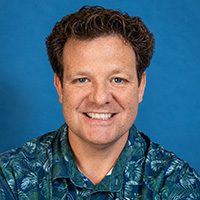
Nick Schiner is the Director of Peer-to-Peer Professional Learning at Digital Promise. Nick began his career as a classroom educator with Baltimore County Public Schools, teaching fourth and fifth grade before moving into the role of Elementary Technology Integration Specialist. After his time in the classroom, he served as Team Leader on the district’s Innovative Learning Team, where he oversaw efforts to help teachers integrate technology meaningfully and design hands-on, authentic learning experiences grounded in constructionism and constructivism. He holds a Bachelor of Science in Elementary Education from Towson University and a master’s degree in educational technology from Johns Hopkins University.
Join the Digital Promise Futue of Learning community to network with educators, participate in online discussions, receive invitations to upcoming edWebinars, and view recordings of previous programs to earn CE certificates.
Learn more about earning a CE certificate and our accessibility features.

Digital Promise is a global nonprofit working to expand opportunity for every learner. We work with educators, researchers, technology leaders, and communities to design, investigate, and scale innovations that support learners, especially those who’ve been historically and systematically excluded. Our vision is that every person engages in powerful learning experiences that lead to a life of well-being, fulfillment, and economic mobility. For more information, visit the Digital Promise website and follow Digital Promise for updates.
