Press Releases

Key Lessons on Developing a Sustainable Literacy Improvement Program

Key Lessons on Developing a Sustainable Literacy Improvement Program

Faced with a need to improve literacy skills and overall reading achievement, district leaders from Berkeley Unified School District in California (BUSD) knew that, no matter what they did, results wouldn’t be fast or easy. But only after three years of dedicated systematic change in kindergarten through fifth grade, they have seen improvement in not just student scores but also in teacher confidence in their ability to meet students’ needs.

A Solution to Chronic Absenteeism: Data-Driven MTSS

A Solution to Chronic Absenteeism: Data-Driven MTSS

School attendance across the country is a pressing concern. Post-pandemic absenteeism rates are a primary contributor: Between 2018 and 2022, chronic absences climbed by a troubling 91%, translating into an additional 6.5 million students regularly missing school and crucial instruction.

10 Insider Tips for Webinar Marketing

10 Insider Tips for Webinar Marketing

Webinars have become one of the most popular marketing channels for solution providers. Hosting thought leadership and professional learning webinars is a great way for a company at any stage, particularly in these challenging times, to engage with educators for brand recognition, lead generation, content marketing, market insights, and nurturing relationships with education experts and leaders.

Students Are Ready for Schools to Include AI in Learning: What the Research Says

Students Are Ready for Schools to Include AI in Learning: What the Research Says

In conversations surrounding AI in schools, the opinions often heard are from the adults—the teachers, parents, and administrators. But what do the kids think? That’s exactly what Project Tomorrow set out to find out in their latest Speak Up Research Report, Students Speak Up About AI in Their Learning Lives.

Applying the Science of Reading in the Classroom

Applying the Science of Reading in the Classroom

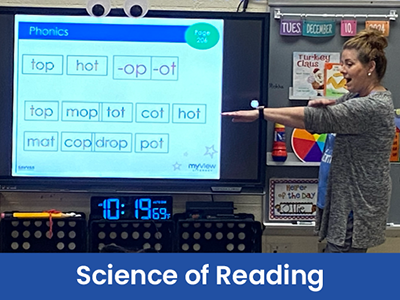
The Science of Reading has become widely accepted in education, so what does it look like in practice? In the edLeader Panel “The Science of Reading in Real Life: Real Strategies for Real Classrooms,” Sarah Von Heal, Literacy Marketing Manager at Savvas Learning Company, discussed the practical applications of the Science of Reading with experts Dr. Sharon Vaughn, Professor and Executive Director of the Meadows Center for Preventing Educational Risk at the University of Texas at Austin, Dr. Pamela Mason, Director of the Jeanne Chall Reading Lab at the Harvard Graduate School of Education, and Dr. Young-Suk Kim, Professor at the School of Education at University of California, Irvine.

Student Literacy Success: Start Early with Actionable Feedback

Student Literacy Success: Start Early with Actionable Feedback

Far too many students struggle with reading, with scores dropping in both fourth and eighth grades, and one-third of eighth graders not reading at basic levels. Schools must implement early literacy development quickly if they’re to get ahead of the ongoing literacy crisis.

From Data to Impact: Driving Outcomes Through Systemwide Intervention

From Data to Impact: Driving Outcomes Through Systemwide Intervention

U.S. students continue to lag behind their peers in other high-performing nations—a stark reminder that district and school leaders must find better ways to drive measurable results. With increased scrutiny and a higher bar for accountability, they need to know what’s happening in their own schools and classrooms—what’s working, what’s not, why, and what can be done about it. And evidence-based interventions are just half of the success equation; they also need better data insights.

Strategies and Structures for Successful Intervention

Strategies and Structures for Successful Intervention

No matter which strategy is used, the goal of MTSS behavioral interventions is to connect students to the school and their own education. One of the most common strategies is Check-In Check-Out (CICO), where students meet with a mentor at the beginning and end of every day to set goals, receive points from teachers for meeting goals, and earn rewards based on their points.