


It is important to define and address literacy problems to ensure that struggling students learn and improve. In “Teaching Students with Literacy Problems—Including Dyslexia,” hosted by edWeb.net and sponsored by Brookes Publishing, Nickola Wolf Nelson, Ph.D., Professor Emerita, Department of Speech, Language, and Hearing Sciences, Western Michigan University, reviewed techniques educators can use to teach their students with literacy problems.
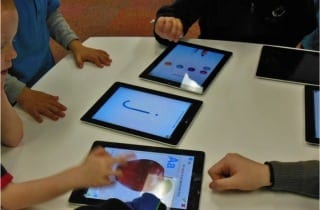
Change is inevitable, and while it’s important to design lessons with an end result in mind, it’s difficult to prepare students for a future that doesn’t exist yet. In the recent edWebinar, “The Future Ready Challenge: Improve Student Outcomes in 18 Weeks,” hosted by edWeb.net, Dr. L. Robert Furman, Elementary Principal and author of The Future Ready Challenge, discussed tips to help educators prepare students for an unknown future.

edWeb is so excited to congratulate Michelle Luhtala, department chair at New Canaan High School Library in Connecticut, for being selected as a 2017 AASL Social Media Superstars winner! AASL’s Social Media Superstars program honors school library professionals who enrich the profession and its work on behalf of students by sharing information, expertise, ideas, encouragement, dialog and inspiration using a variety of social media channels.

Michele Borba, Ed.D., Educational Psychologist, author, and expert in bullying prevention and character development, was interviewed on Education Talk Radio for edWeb.net’s monthly show by Program Host Larry Jacobs along with Lisa Schmucki, edWeb founder, and Judy Galbraith, President and founder of Free Spirit Publishing. Michele, Judy, Larry, and Lisa discussed cultivating empathy and preventing bullying.

Ineffective professional development wastes teacher time, district resources, and most importantly, affects student results. In “Teachers’ Skills in the Digital Age and Personalized PD for Teachers,” hosted by edWeb.net and sponsored by 2gnō.me, Lynn Gershman, Educator at, 2gnō.me, explored issues in PD and the importance of personalizing PD for teachers.

Students today are increasingly turning to online new sources to meet their research needs. Because of this, it is important for educators to teach students about trustworthy news sources. In “Media Literacy: A Crash Course in 60 Minutes,” hosted by edWeb.net and sponsored by Mackin Educational Resources, Michelle Luhtala, Library Department Chair at New Canaan High School, CT, interviewed Greg Toppo, the National Education and Demographics Reporter for USA Today, on today’s shifting trends in journalism and how teachers can help students identify reliable sources.

When implementing a blended learning model, it is important for schools to be aware of key components and steps to integrate into their plan. In “Five Tips for Getting Blended Learning Right,” hosted by edWeb.net and sponsored by Achieve3000, Julia Freeland Fisher, Director of Education at the Clayton Christensen Institute, gave schools the tips they need to successfully implement blended learning.
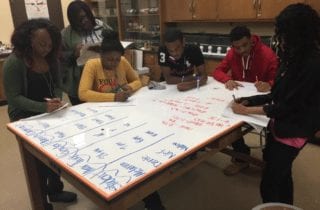
“If we don’t have enough time or resources to do everything we’re asked to do, or want to do in the classroom, what should we do?” Kevin Baird, Chairman of the Board at the nonprofit Center for College & Career Readiness, asked. With limited time and resources, teachers often have to prioritize what goes on in their classrooms. In “Yes They Can: The Five Highest Impact Priority Practices for Classrooms,” hosted by edWeb.net and sponsored by The Center for College & Career Readiness, Kevin delved into the top five critical classroom practices.
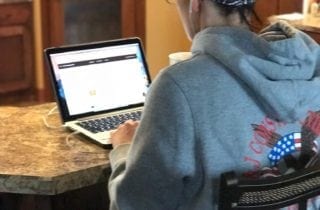
Rachel Langenhorst, K-12 Technology Integrationist and Instructional Coach in Rock Valley, IA, was interviewed on Education Talk Radio for edWeb.net’s monthly show by Program Host Larry Jacobs along with Lisa Schmucki, edWeb founder. Rachel, Larry, and Lisa talked about the pajama PD day that Rachel’s district held during a recent snow day. The teacher-leadership team in Rock Valley had already planned for a full day of professional development, but had to rethink their plans when the forecast called for a snowstorm.

In 2015, the Every Student Succeeds Act (ESSA) was implemented, replacing the No Child Left Behind Act (NCLB). Due to the rapid transition from NCLB to ESSA, it is important for educators and vendors to be aware of the key differences between the two. Steve Rowley, CEO of Acumen Partners, with Michael Campbell, Vice President of Acumen Partners, presented the latest updates on ESSA in the webinar, “Making Sense of ESSA: What You Need to Know,” co-hosted by edWeb.net and MCH Strategic Data.