


For many of the 4.5 million English Language Learners (ELLs) in U.S. elementary and middle school classrooms, learning and understanding the language of mathematics can be a challenge. Supporting ELLs requires a commitment to a shift in practices which involves the entire school and also branches out to the community. Michele Dawson, Senior Director of Instructional Technology in Compton Unified School District, CA; and Kelly Urlacher, Senior Curriculum Designer at DreamBox Learning, had a conversation of essential approaches for supporting these students in “Key Strategies to Making Access and Equity a Reality for ELL Students.”
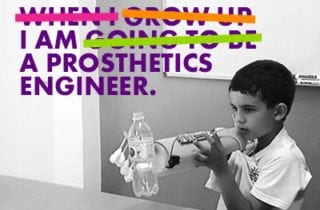
STEAM lessons offer educational benefits beyond technological literacy, such as collaboration, creativity, and critical thinking. Educators who incorporate STEAM into the classroom are preparing students now for jobs that don’t exist yet by giving them confidence in problem-solving, noted Dr. Azadeh Jamalian, Adjunct Assistant Professor at Teachers College, Columbia University, Head of Education Strategy at littleBits. For many educators, though, blending STEAM with traditional subjects can still seem daunting. During the edWebinar “Bringing Hands-On Coding and STEAM into Your District or Classroom,” Dr. Jamalian offered attendees insights into four key factors that can support successful STEAM integration.

Augmented reality is emerging in the education space as a tool for motivating children to learn. Using this 3D technology can help students significantly whether they’re struggling to learn reading or math, or just to engage. Cynthia B. Kaye, CEO and Chief Zoo Keeper at Alive Studios, discovered this technology while in search of a way to support her own two ELL children. She discussed the benefits of using augmented reality in the classroom in “Engaging Early Learners with Augmented Reality.”

Many schools and districts are prioritizing the adoption of digital content and curricula, but the challenges of effectively evaluating, selecting, and implementing solutions still persist. However, with the right tools, technology can improve student achievement and empower educators. In “The 21st Century District’s Framework for Evaluating Digital Curriculum,” Dr. Tim Hudson reviewed important steps in finding the right digital curricula for your students’ needs.

Research indicates that due to a heightened interest in visual materials combined with strong visual processing capabilities, many individuals with autism are attracted to and benefit from using technology. From devices, to apps, to smart home implementations, technology can help improve daily life for those on the autism spectrum immensely, and software and devices that are currently in development offer great promise for the future. In a recent edWebinar, Christian Karter, MA, Educational Technology Specialist at Monarch Center for Autism, reviewed the benefits of some of this helpful technology.

Continuous, effective professional learning can help teachers and administrators improve teaching and learning, but research shows traditional forms of professional development have become expensive and ineffective.

Early intervention: it’s a common mantra for any student with learning difficulties, including dyslexia. But as Terrie Noland, National Director of Educator Engagement for Learning Ally, pointed out in a recent edWebinar, those services are not consistently available to students across the United States. In “Dyslexia: Hidden Costs and Money-Saving Techniques for Districts,” Noland makes a case for front-loading the funding to shrink the learning gap at an earlier age and offers cost-effective solutions to help students engage in their education.

STEAM (Science, Technology, Engineering, Art, and Mathematics) has become more prominent as an effective approach to interdisciplinary learning. However, implementation is not as simple as following a new curriculum or purchasing materials. During the edWebinar “STEAM: Innovations That Solve Real World Problems,” Cheri Sterman, Director of Education, Crayola; Lucie Howell, Director of Learning and Engagement, The Henry Ford; and James Wells, Innovative Teaching & Learning Manager, Crayola, explained the movement’s genesis and offered strategies for a successful transition.
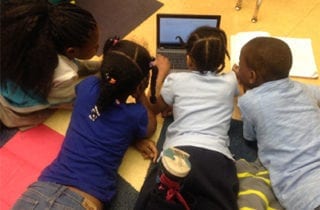
Media literacy is more important today than ever. It is a critical skill for students of all ages, especially because teenagers spend an average of nine hours a day on media that doesn’t include schoolwork or homework. Educators must give students the tools and skills they need to decipher between reliable and unreliable sources of media. Susannah Moran, Senior Project Manager at myON, presented tips for providing students with these important media literacy skills in “Teaching Media Literacy in the Classroom.”

With the proliferation of technology in school and at home, parents are looking for direction on how to keep their kids’ media habits in check. Librarians, who are often at the front lines of media and tech in schools, can provide that crucial guidance. The discussions shouldn’t focus on denying technology, though, said Michelle Cooper, Library Media Specialist, White Oak ISD, TX in the edWebinar “Achieving Media Balance in a Tech-Immersed World.” Instead, librarians can help families learn how to maintain a healthy balance and become good digital citizens.