

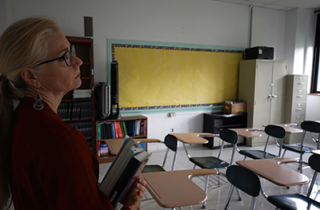
During the edLeader Panel “Decreasing Absenteeism and Its Effects with Meaningful Strategies,” Brian Marques, Sr. Director of Opportunity Youth for Boston Public Schools (MA), Aspen Florence, Educational Consultant for the Utah State Board of Education, and Cecelia Leong, Vice President of Programs for Attendance Works, provided insights into leveraging Multi-Tiered Systems of Support (MTSS) and innovative approaches to understand and address chronic absenteeism and attendance barriers.

It’s one thing to aspire and another to distill goals into actionable, day-to-day reality that gets everyone moving in the same direction. Creating equal learning opportunities for every student requires overcoming resource limitations, community values, staff culture, and more. Technology can be the linchpin for success, and three outstanding district leaders offer a roadmap any school can follow—no matter the challenges.

Improvements in students’ reading achievement require continued learning not just by the students, but also by their educators. As discussed during the edLeader Panel “Putting Your Literacy Data to Work, from Classroom to Central Office,” all the adults involved in the literacy development process, from administrators to coaches, teachers, and paraprofessionals, need to continue learning from the research, each other, and their students.

One of the biggest issues facing our students is education inequity. When students don’t have the resources they need, it’s often harder for them to succeed.

National literacy rates remain at an all-time low, and many schools are shifting to more core phonics curricula for their existing ELA programs. During the edLeader Panel “A Revolution in PK-2 Literacy: Invest in Prevention and Do Less Intervention,” three pathfinding school leaders revealed how to revolutionize your district.

One thing is sure: There’s no shortage of initiatives addressing learning and teaching issues. Yet often, they don’t stick. Good intentions tend to get caught in the adopt, attack, and abandon model.
New teachers face unique challenges, and their success largely depends on the structure and systems schools have in place for their support. Three academic leaders shared their strategies and advice in the edLeader Panel “How to Smooth the Transition and Speed the Effectiveness of Beginning Teachers.”

In classrooms and workplaces, the biggest enemy of productivity and safety is distraction. During the edLeader Panel “The Skills List | Case 74: Distraction as a Workplace Hazard,” Kevin Baird, Chairman of the Global Center for College and Career Readiness, talked with Ruth Brus, Vice President of Learning Services at Meteor Education, and Levi Belnap of Merlyn Mind, about managing the biggest cause of distractions in the classroom.

During the edLeader Panel “Mastering the Art of Building Your Ed Leadership Network,” a distinguished panel of educators and industry veterans engaged in a thought-provoking discussion centered around leveraging personal networks to maximize educational outcomes in their respective districts.

In the edLeader Panel “From CDs to AI: Congressional Briefing on 20 Years of Speak Up Research,” Dr. Julie A. Evans, CEO of Project Tomorrow and the founder of the heralded Speak Up Research Project, along with a panel of students, had a conversation about decades of trends and the latest shifts in digital learning today.