edWeb Blog

Developing Imagination and Creativity in All Students

Developing Imagination and Creativity in All Students

If, as many educators say, today’s students will work in jobs that don’t exist yet and use technology that hasn’t been invented, how do we prepare them? According to Dan Hunter, author of Learning and Teaching Creativity, and Dr. Rex Jung, President of Brain and Behavioral Associates, we teach students to understand and embrace their imagination. During the edLeader Panel “Creativity in and Out of the Classroom,” they discussed key aspects of imagination and creativity and how they help students become productive problem solvers.


Engage Students and Boost Creativity with Coding and Music

Engage Students and Boost Creativity with Coding and Music

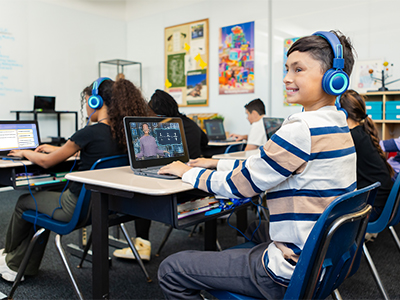
What role can music play in school success? During the edLeader Panel “Boost Student Creativity and Engagement with Coding and Music,” experts and education leaders, including Alberto Carvalho, Superintendent of Los Angeles Unified School District, showed how the free Music Lab platform can help decrease absenteeism and increase engagement by giving students the opportunity to compose and remix music while learning essential coding and computer science skills.

Transforming Student Support: 5 Crucial Lessons for MTSS Implementation

Transforming Student Support: 5 Crucial Lessons for MTSS Implementation

Disoriented. Complicated. Collaborative. A work in progress. Do these words describe your district’s Multi-Tier System of Supports (MTSS) journey? Much of the audience who responded in the live chat during the edLeader Panel “Authoring Your MTSS Story: A Success Spotlight with Chicago Public Schools” described their district’s process like this, reflecting a common theme among many school districts nationwide.

Implementing a Digital Reading Platform Across an Entire School District

Implementing a Digital Reading Platform Across an Entire School District

Situated in the heart of Florida, Orange County is nestled between the Atlantic Ocean and the Gulf Coast and is a magical carriage ride from the “Happiest Place on Earth,” Walt Disney World! Given its location, it is no wonder that Orange County Public Schools (OCPS) is now home to 208,000 students who speak more than 170 different languages.

Overcoming Obstacles for Discussing AI in the Classroom

Overcoming Obstacles for Discussing AI in the Classroom

For many educators, the first response to asking about using AI is, “No, not in our school.” But during the edLeader Panel “AI in Education: Steering Towards Equity and Empowerment,” experts explained why AI shouldn’t be automatically shunned and, instead, should be viewed as another powerful tool in an educator’s arsenal.

Building the Foundations for Fluency and Deep Reading

Building the Foundations for Fluency and Deep Reading

Three literary scholars took an in-depth look at the components of the reading brain in relation to fluency and comprehension during the edLeader Panel “Building the Foundations for Fluency and for Deep Reading.” This panel was the second in a two-part series on Closing the Fluency Gap, with part one exploring the science of learning.

Overcoming the New Challenges of Teaching Multilingual Learners

Overcoming the New Challenges of Teaching Multilingual Learners

As new arrivals continue to increase the numbers of English language learners in school districts across America, educators are also adapting to the changes in instruction based on the Science of Reading, which may be further complicated in some school districts by shortages in the number of certified teachers.

Early Warning Systems and MTSS: The Essential Components

Early Warning Systems and MTSS: The Essential Components

According to data from the American Enterprise Institute and EdWeek Research Center, school districts across the country are reporting sharp and consistent increases in chronic absenteeism and behavior problems, both of which are negatively impacting academic achievement. While many districts believe these problems are a result of the pandemic, the fact remains these are serious problems that require real-time interventions to get students back on track.