


Teachers and staff want to develop effective relationships with families, but adding another activity can be daunting. During the edLeader Panel, “Highly Effective Family Engagement: 5 Habits to Start Now,” Jessica Webster, Ed.D., Senior Family Engagement Specialist for MAEC, Inc., and Rebecca Honig, Chief Content and Curriculum Officer at ParentPowered, explained how educators can build on existing activities and interactions to deepen school-home ties.
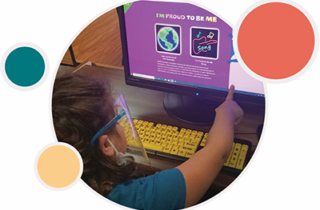
When students with disabilities come to your school, the technology that can help them succeed should be immediately available. Therefore, strategies for identifying and selecting accessible and inclusive tech should be top of mind.

With all the learning benefits of EdTech, it’s surprising that almost 60% of students are less engaged in the classroom than they were with less technology. It seems technology has become too much of a good thing, reducing student energy and concentration during the school day.

edWeb.net has just released results for its annual 2023 Professional Learning Survey with five years of data benchmarking teachers’ attitudes and experiences with professional learning.

When the Nation’s Report Card for 2022 was released by the National Assessment of Educational Progress (NAEP), the declines in student reading and math scores were alarming, but for many, the data was not surprising.

With a convergence of research around the Science of Reading, educators recognize that there needs to be an evolution in how it’s taught. But despite understanding that literacy education needs to change, teachers still face many challenges.

The number of students with disabilities in U.S. schools is growing. Yet the number of teachers, paraprofessionals, and other staff qualified and prepared to teach them is declining, leaving special education learners without the services and support they need.

Technology equity has evolved over the years, and we must be open to the needs of tomorrow, next year, and five years down the road.

What if you didn’t give your students a science problem to solve with specific tools that lead them to a desired response, but instead gave them a data set, questions to guide their investigation, and the choice of means to shape their analyses?

A recent edLeader Panel, “Utah Spotlight: A ‘State’ of Alignment,” featured a panel of experts that included Rick Gaisford, Education Specialist, Education Technology and the SETDA Chair Elect, Utah State Board of Education; Melanie Durfee, Ph.D., Education Specialist, Digital Teaching & Learning, Utah State Board of Education; Nancy Mangum, Director of Learning Partnerships, Leading EDge Learning; Theresa Gibson, Director of Operations, Leading EDge Learning; and Darren Hudgins, Founder and CEO, Think Do Thrive.